Difficult seeds
By Shauna Dobbie
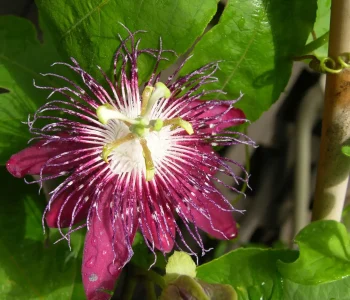
If you have no problem growing tomatoes and zinnias from seed, but celery and passionflower vine make you tear your hair out, I feel your pain. Some plants are just more difficult to start than others. If you can figure out what a particular seed needs, you’re halfway to succeeding.
Assuming you are using good-quality seeds that are new, there are six common reasons that seeds won’t get going.
Hard: hard seed coat.
Solution: Scarify seed coat.
Some seeds have a very hard outer seed coat that prevents water from reaching the embryo inside to begin growing. Scarification, in which you scratch or weaken the seed coat, can help water enter and trigger gemination.
Strat: require stratification.
Solution: Refrigerate in moist medium for several weeks.
Some seeds need to go through a cold period before germination. This is often the case with plants native to Canada.
Light: require light.
Solution: Sow on surface of the growing medium.
A few seeds need light to germinate and won’t start to grow if they’re covered in soil. Others grow better without soil cover but will germinate in darkness.
Heat: require heat.
Solution: Use a heat mat or warm location.
Some – but not all! – require heat to germinate. This is the case with tomatoes, peppers and eggplants, but it is a well-known proclivity, so seed-starting gardeners often have heat mats.
Slow: slow germination rate.
Solution: Be patient and keep evenly moist.
Some seeds germinate just fine, given enough time. Keep them watered and wait.
Low: low germination rate.
Solution: Sow more seeds than needed.
Some species naturally produce seeds with variable viability, so even under ideal conditions only a portion may germinate.
Some seeds are difficult to germinate for more than one reason. Listed below are several seeds that can give you trouble and the reason or reasons from above
| Plants | Hard | Strat | Light | Heat | Slow | Low |
|---|---|---|---|---|---|---|
| Ornamentals | ||||||
| Begonia | ✓ | |||||
| Bleeding heart | ✓ | ✓ | ||||
| Columbine | ✓ | ✓ | ||||
| Delphinium | ✓ | ✓ | ||||
| Echinacea | ✓ | ✓ | ||||
| Eryngium | ✓ | ✓ | ||||
| Hellebore | ✓ | ✓ | ✓ | |||
| Lavender | ✓ | ✓ | ✓ | |||
| Lupine | ✓ | |||||
| Morning glory | ✓ | |||||
| Milkweed | ✓ | ✓ | ||||
| Nasturtium | ✓ | |||||
| Oriental poppy | ✓ | |||||
| Pansy | ✓ | |||||
| Passionflower | ✓ | ✓ | ✓ | |||
| Penstemon | ✓ | |||||
| Peony | ✓ | |||||
| Rose | ✓ | ✓ | ||||
| Scabiosa | ✓ | |||||
| Snapdragon | ✓ | |||||
| Sweet pea | ✓ | |||||
| Trillium | ✓ | |||||
| Yarrow | ✓ | |||||
| Edibles | ||||||
| Artichoke | ✓ | |||||
| Celery | ✓ | ✓ | ||||
| Cucumber | ✓ | |||||
| Dill | ✓ | |||||
| Eggplant | ✓ | |||||
| Melon | ✓ | |||||
| Okra | ✓ | ✓ | ||||
| Parsley | ✓ | ✓ | ||||
| Parsnip | ✓ | |||||
| Pepper | ✓ | |||||
| Squash | ✓ | |||||
| Strawberry | ✓ | ✓ | ||||
| Tomato | ✓ | |||||