
Do tree roots communicate?
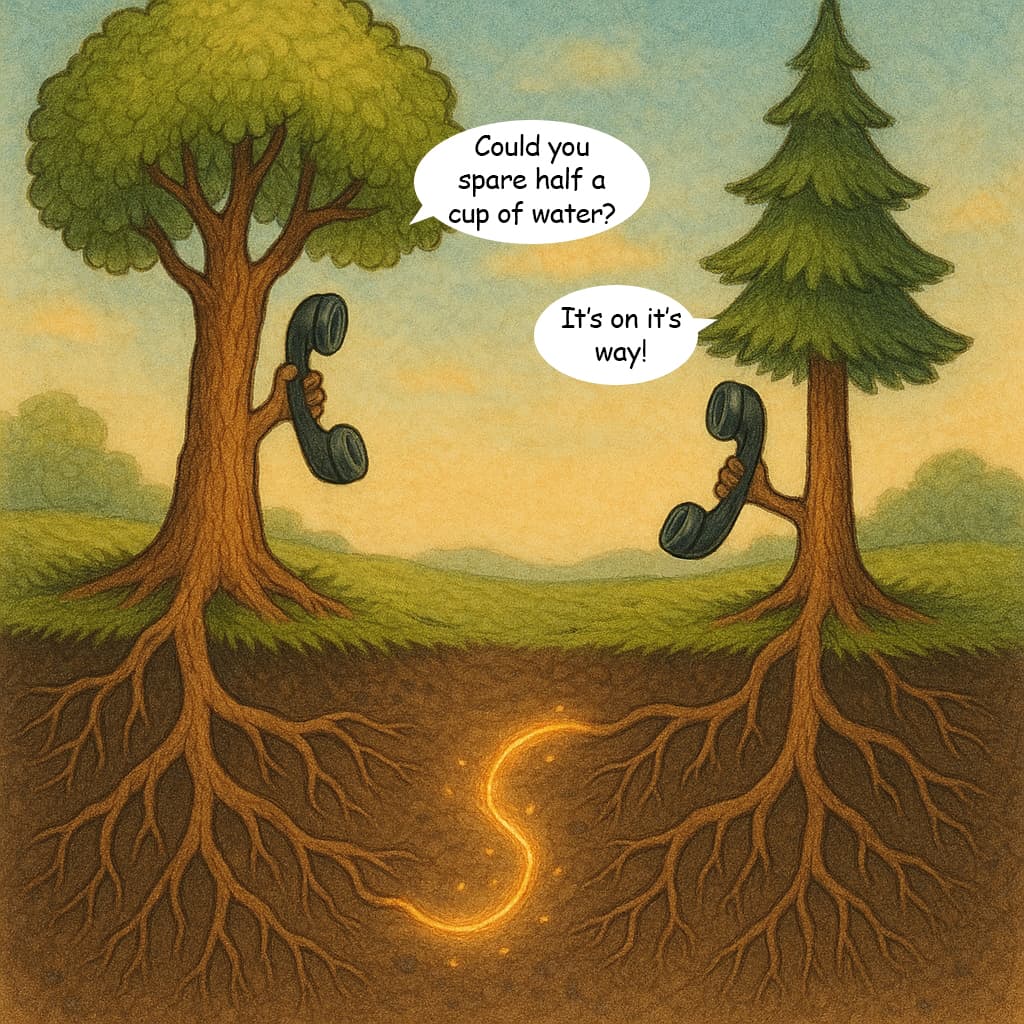
Plants may not have mouths, but under the soil their roots are busy sending messages. Sometimes they help their neighbours and sometimes they sabotage them.
Chemical signals: the good and the bad
Roots release thousands of compounds into the soil, collectively called root exudates. These chemicals feed soil microbes, attract fungi, and alter the behaviour of nearby plants. Through these secretions, one plant can warn another of insect attack, encourage cooperation, or suppress competition. When a root senses stress, like drought or pest damage, it may release signalling molecules such as jasmonic acid, a “fight-or-flight” plant hormone. Neighbouring plants detect the cue and strengthen their own defences, producing protective enzymes or changing the chemistry of their leaves. It’s the plant world’s version of a neighbourhood watch.
But not all underground messages are kind. Many plants practise allelopathy, a chemical form of sabotage. Black walnut trees, for example, release juglone, a compound that stunts or kills sensitive species such as tomatoes, apples, and pines. Sunflowers, sorghum and certain grasses do the same, exuding chemicals that block the germination or growth of rivals. These strategies give the plant sending them more access to nutrients, light, and space, even as they poison potential competitors.
The fungal connection
Much of this communication happens through fungi. Mycorrhizal fungi colonise roots and spread fine filaments called hyphae through the soil, linking one plant’s root system to another’s. Scientists call this network the common mycorrhizal network, or more colourfully, the “wood-wide web.” Through these fungal threads, plants can share nutrients, send chemical warnings, and even influence the growth of others.
The cooperation can be surprisingly generous. In some forests, older trees feed shaded seedlings with carbon and nitrogen through the network, helping them survive. But fungi are not altruistic messengers; they charge a fee, taking sugars from their hosts. In nutrient-poor soils, the balance can shift. The fungi may favour certain partners or divert resources elsewhere, turning the network from cooperative to exploitative.
Roots in conflict
Some signals set off competition instead of cooperation. When roots detect the chemical profile of a closely related neighbour, they may restrain growth to avoid crowding. When the neighbour is unrelated, though, roots often respond by growing faster or deeper, a silent underground race for water and nutrients. This sensitivity allows plants to map their surroundings without moving an inch.
How it counts in the garden
For gardeners, these hidden interactions explain why some plant combinations thrive and others struggle. Companion planting, crop rotation, and soil health all tie back to what happens underground. Encouraging a diverse microbial community and maintaining organic matter support the beneficial side of root signalling.
A wordless conversation
While the idea of roots “talking” is metaphorical, the science is clear: plants exchange a constant flow of information below the surface. They warn, compete, nurture, and deceive, all through chemistry and the fungi that weave them together. The next time you walk through a forest or turn the soil in your garden, imagine the intricate web beneath you: a living network carrying messages from root to root, shaping the community above.
Glossary
Jasmonic acid: A natural chemical messenger that plants make when they’re hurt or attacked, warning nearby leaves or even neighbouring plants to toughen up.
Allelopathy: When one plant puts the brakes on others by releasing natural chemicals into the soil or air that slow their growth or stop seeds from sprouting.
Juglone: A toxic compound made by black walnut and a few of its relatives that seeps into the soil and poisons sensitive plants like tomatoes and hydrangeas.
Root exudates: The sugars, acids, and other compounds that roots ooze into the soil to feed friendly microbes or send chemical messages to other plants.
Mycorrhizal fungi: Microscopic fungi that connect with plant roots, helping them gather water and nutrients in exchange for a bit of the plant’s sugar.
Hyphae: The thin, hairlike threads that grow out from a fungus or its spores, spreading through the soil to form a vast underground network.