10 Neat Things about 

Insects that survive freezing

While we haul out the parkas and dig the ice scraper out of the trunk, the insects in our gardens are making far more dramatic preparations. Some will spend the winter as little blocks of ice. Others will spend it refusing, with great determination, to freeze at all. Canadian researchers have been really good at figuring out how they pull it off.

1. Insects pick one of two winter plans: freeze solid, or refuse to freeze at all

Freeze avoiders keep their body fluids liquid well below 0°C, a trick called supercooling, and they die if ice ever forms inside them. Freeze-tolerant insects take the opposite approach. They let ice form in their bodies and thaw out in spring ready to carry on. Freeze tolerance has evolved many separate times in insects, which tells you it is a very good idea in a cold climate. Researchers at Western University point out that there is no single magic molecule behind it. Each freeze-tolerant species seems to have assembled its own toolkit, often from tools its ancestors already used for coping with cold or drought.

It is tempting to think the hard part is turning into an ice cube. In fact, freeze-tolerant insects have to survive a whole process: cooling down, ice forming, sitting frozen for weeks or months, then thawing and repairing whatever broke along the way. Ice inside a cell is generally fatal, so these insects keep it in the spaces between cells. As ice forms there, water is pulled out of the cells, leaving them shrunken and concentrated until spring. Getting everything back into balance afterward is a major job, and failing at it is a common way for a frozen insect to die.

Gall on spent goldenrod

Next time you walk past a stand of goldenrod, look for a round swelling partway up the stem. Inside is the larva of the goldenrod gall fly, one of the most studied freeze-tolerant insects in the world. It loads up on glycerol and sorbitol, which protect its cells while the rest of it freezes. When Western University researchers froze and thawed the larvae repeatedly, the larvae responded by raising their sorbitol levels by about half. That extra protection came at a price: flies that had frozen more often produced fewer eggs. Winter, it turns out, sends a bill.

Wooly bear caterpillar

The fuzzy black and orange caterpillar crossing your driveway this month is the woolly bear, young of the Isabella tiger moth, and it will freeze solid under the leaves. Being frozen once is survivable. Being frozen, thawed and frozen again is harder. In Ontario experiments, repeated freezing did not drain the caterpillars’ energy reserves, but it did injure their immune cells and their Malpighian tubules, which work as insect kidneys. Repeatedly frozen caterpillars were less likely to survive. Whatever their stripes may or may not say about the coming winter, they would vote for a steady one.

On Ellesmere Island, a cousin of our woolly bear spends most of its life frozen. Summers are so short that it only manages a little feeding and one moult before freezing again. For years it was said to take 14 years to reach adulthood. Fieldwork by University of Victoria researchers at Alexandra Fiord revised that to about seven years for most of the population. Seven years as a caterpillar, frozen for the majority of each one, is still a remarkable feat of patience. Halving a famous fact may sound like a letdown, but it is a lovely example of science correcting itself.

On mild winter days, snowbanks are sometimes sprinkled with what looks like pepper. Those are snow fleas, which are not fleas and are, strictly speaking, not even insects. They are springtails, a related group of six-legged animals. Researchers at Queen’s University isolated a powerful antifreeze protein from them that keeps ice crystals from growing until temperatures fall nearly six degrees below freezing. It was built quite differently from the antifreeze proteins already known from beetles and moths, which suggests that cold has pushed different creatures to invent the same solution independently. Kingston’s snowbanks, it turns out, are a biochemistry lab.

Bumblebee queen

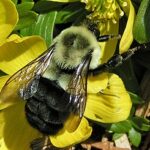
Only the newly mated queens of a bumblebee colony make it through winter. They dig in and wait for spring. Just where they wait remains a surprisingly open question. A York University review of the world’s scientific literature found 55 studies of bumblebee nests but only 10 studies of overwintering sites. Most of the research was done in the United Kingdom, and most of it in farm fields rather than gardens, woods or cities. Nests themselves were most often underground. With so little known, the safest assumption for a gardener is that a quiet, undisturbed patch of ground in your yard may well have a sleeping queen in it.

Emerald ash borer

Early work on emerald ash borers in southwestern Ontario found that they froze and died at around minus 30°C, which suggested some Canadian cities would be too cold for them. Then the beetle turned up in Winnipeg and survived polar vortex winters. Researchers at Western University and Natural Resources Canada found that the Winnipeg beetles were far more cold-tolerant, with much more glycerol in their blood. When Winnipeg beetles spent a winter in southwestern Ontario instead, they were no hardier than the local ones. The toughness was an adjustment to conditions, not an evolutionary change. Bad news for anyone hoping a cold snap will save their ash.

Dormant insects do not eat, so they have to make summer’s fat reserves last until spring. Warm temperatures speed up their metabolism, burning that fuel faster. Western University researchers studied caterpillars of the propertius duskywing, a butterfly that lives on Garry oak in British Columbia, and found that fluctuating temperatures cost even more energy than steady warmth. The caterpillars partly compensated by turning their metabolism down. The researchers concluded that extended warm autumns and more variable winters are likely to hurt any dormant insect that cannot pull off the same trick. A lovely October for us may be an expensive one for them.

Most climate research focuses on the growing season, but winter is shifting quickly too: warmer averages, wilder swings and less reliable snow. A review led from Western University argued that these changes interact in ways that can cause cold injury, disrupt energy and water balance, and throw off the timing of spring. Snow matters a great deal, because it insulates the ground. Less snow can mean colder soil, even in a warmer winter. Some species will benefit and some will suffer, and the authors stress that we cannot predict which without paying attention to what happens in the cold months.

Images

By: Zastavkin

Source: iStock

Licence:

By: APHIS.gov

Source: Wikimedia

References

Toxopeus, J. and Sinclair, B.J. (2018). Mechanisms underlying insect freeze tolerance. Biological Reviews 93: 1891–1914.
A comprehensive review from Western University. It frames freeze tolerance as a process of cooling, freezing and thawing, and makes the case that there is no single molecule responsible. Supports items 1 and 2.

Marshall, K.E. and Sinclair, B.J. (2018). Repeated freezing induces a trade-off between cryoprotection and egg production in the goldenrod gall fly, Eurosta solidaginis. Journal of Experimental Biology 221: jeb177956.
Laboratory experiments that froze gall fly larvae up to 10 times at temperatures down to minus 20°C. Source of the roughly 50 percent rise in sorbitol and the cost to egg production. Supports item 3.

Marshall, K.E. and Sinclair, B.J. (2011). The sub-lethal effects of repeated freezing in the woolly bear caterpillar Pyrrharctia isabella. Journal of Experimental Biology 214: 1205–1212.
Ontario study showing that repeated freezing damaged immune cells and Malpighian tubules and lowered survival without depleting energy stores. Supports item 4.

Morewood, W.D. and Ring, R.A. (1998). Revision of the life history of the High Arctic moth Gynaephora groenlandica (Wocke) (Lepidoptera: Lymantriidae). Canadian Journal of Zoology 76: 1371–1381.
Fieldwork at Alexandra Fiord, Ellesmere Island, that revised the widely quoted 14-year life cycle to a typical seven years. The authors note individuals may vary. Supports item 5.

Graham, L.A. and Davies, P.L. (2005). Glycine-rich antifreeze proteins from snow fleas. Science 310: 461.
Queen’s University report of the snow flea antifreeze protein, its glycine-rich structure and its ability to stop ice growth at nearly six degrees below freezing. Supports item 6.

Liczner, A.R. and Colla, S.R. (2019). A systematic review of the nesting and overwintering habitat of bumble bees globally. Journal of Insect Conservation 23: 787–801.
York University review counting 55 nesting studies and only 10 overwintering studies worldwide, with a heavy bias toward the U.K. and agricultural land. Supports item 7.

Duell, M.E., Gray, M.T., Roe, A.D., MacQuarrie, C.J.K. and Sinclair, B.J. (2022). Plasticity drives extreme cold tolerance of emerald ash borer (Agrilus planipennis) during a polar vortex. Current Research in Insect Science 2: 100031.
Western University and Natural Resources Canada study comparing Winnipeg and southwestern Ontario beetles, including a transplant experiment showing the extra cold tolerance is plastic rather than inherited. Supports item 8.

Williams, C.M., Marshall, K.E., MacMillan, H.A., Dzurisin, J.D.K., Hellmann, J.J. and Sinclair, B.J. (2012). Thermal variability increases the impact of autumnal warming and drives metabolic depression in an overwintering butterfly. PLoS ONE 7(3): e34470.
Open-access study of propertius duskywing caterpillars showing that warm, variable autumns increase energy use, and that the caterpillars partially compensate. Supports item 9.

Williams, C.M., Henry, H.A.L. and Sinclair, B.J. (2015). Cold truths: how winter drives responses of terrestrial organisms to climate change. Biological Reviews 90: 214–235.
Review arguing that winter temperature, variability and snow cover all shape how species respond to climate change, and that summer-focused models miss much of the picture. Supports item 10.

Your subscription could not be saved. Please try again.
Your subscription has been successful.

Ten Neat Things

Subscribe to our weekly email newsletter.