

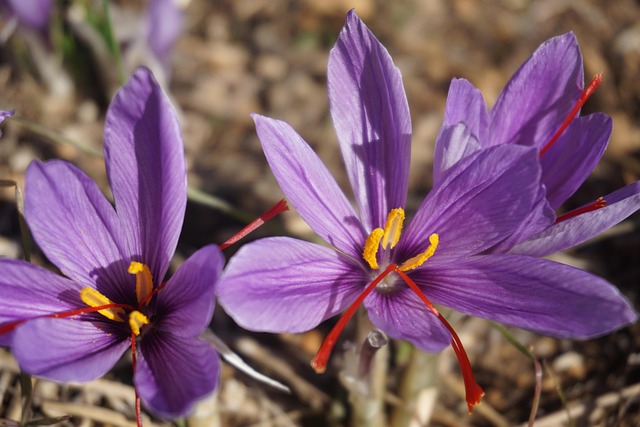
Saffron was long treated as roughly a Zone 6 to 8 plant. Quebec field trials showed that the corms can survive much colder winters when snow insulates the soil. Researchers grew Crocus sativus outdoors under a cold Quebec climate and monitored soil temperature around the corms.
Air temperatures could fall below -30 Celsius, but the soil around buried corms remained far warmer because of snow cover. The snow acted as insulation, reducing the temperature swings experienced underground.
That does not mean every cold Canadian garden will produce saffron reliably. The study showed that winter survival and flower production are two different questions. The plants survived cold quite well. Getting enough flowers was sometimes harder.
Cultivated saffron is sterile and cannot produce viable seed. Genetic evidence suggests the crop arose from an ancient triploid plant in Greece that people kept alive by dividing its corms.
Crocus sativus is triploid, meaning it carries three sets of chromosomes rather than the usual two. Three chromosome sets do not divide neatly during sexual reproduction, so saffron is effectively sterile. It has been propagated vegetatively through corms throughout its cultivated history.
Genetic analysis points to the wild Greek Crocus cartwrightianus as its ancestor and to Attica, the region surrounding Athens, as the likely place where cultivated saffron arose. At some point an unusual triploid plant appeared. People apparently liked what it produced enough to keep dividing and replanting it.
More than three millennia later, we are still doing it.
A large saffron corm may produce several flowers, while a small one may produce few or none. Since each flower supplies only three red stigmas, corm size has a direct effect on your harvest.
The relationship between corm size and saffron production is much stronger than simply “large bulb, big flower.”
A three year experiment followed saffron grown from mother corms ranging from less than a gram to more than 50 grams. Larger starting corms produced more flowers and more fresh stigma than small ones.
The corm also produces daughter corms, so its size influences the crop beyond the first flowering season. If you are buying corms specifically for saffron production, size matters.
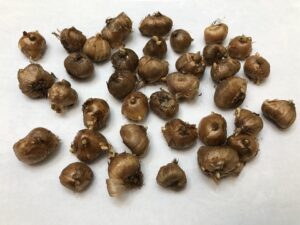
Canadian research found that late July through about the third week of August was the best planting period.
The Université Laval researchers tested different planting times and found that planting between late July and approximately the third week of August gave the best results under their conditions. That may sound early for a crocus, but saffron is already preparing for autumn flowering during summer.
Flower initiation takes place within the corm while temperatures are warm. Once autumn conditions arrive, the developed shoots emerge and flowering follows. This is one reason generic advice to “plant saffron in fall” is not particularly useful for cold Canadian climates.
Cold was not the biggest obstacle in the Quebec trials. Cool summers and rapidly falling autumn temperatures could interfere with flower development. It is tempting to assume that the question for Canadian saffron growers is simply, “Will it survive January?”
The Quebec research suggests another question may matter just as much: “Will it get enough warmth before October?” Flower buds develop during warm conditions inside the corm. In some years, the researchers found that relatively cool summer soil limited flower initiation. Then autumn temperatures could fall quickly enough that some developing shoots did not have time to emerge and flower.
For the home gardener, that argues for the warmest sunny position available rather than merely the most sheltered winter location.
Saffron corms do not appreciate sitting in wet soil. A raised bed or naturally well drained site is safer than a low spot that stays soggy.
Crocus sativus spends the summer dormant underground, and prolonged wet conditions increase the risk of corm disease and decay. The Quebec researchers grew saffron in raised beds, which improved drainage under their humid continental conditions.
For gardeners with heavy clay, improving drainage may be more important than adding fertilizer. A sunny raised bed, slope or other freely draining site is a sensible starting point.

Saffron flowers in autumn, then keeps its narrow leaves through the cool season. They may remain green beneath snow and resume active growth in spring.
After flowering, saffron does not immediately shut down.
Its narrow leaves continue growing as temperatures cool. In snowy climates they can remain alive beneath insulating snow and then resume stronger photosynthesis when light and temperatures improve in spring.
That spring growth is important because the leaves are feeding the daughter corms forming underground. Do not tidy the foliage away while it is green. Wait until the leaves yellow and die naturally in late spring or early summer.
The mother corm produces daughter corms and is gradually used up. Those daughters become next year’s plants. A saffron corm does not simply get larger year after year.
The mother corm supplies the current season’s growth and produces daughter corms. As those develop, the original corm is gradually exhausted. The daughters then become the flowering plants of the following season.
Some may become large enough to flower strongly. Others remain small and produce only foliage and daughters, which with luck will be bigger.
Over several years the number of corms increases and the planting becomes crowded. Eventually growers lift the dormant corms, separate them and replant them with more room.
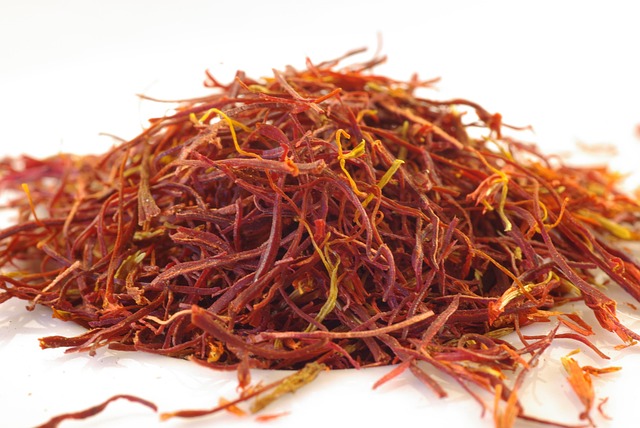
The familiar red saffron threads are the flower’s stigmas and there are just three per flower. That means producing even a modest quantity of saffron requires collecting a remarkable number of flowers and separating those tiny structures from every one.
Researchers have experimented with mechanical flower harvesting, cameras, cutters, airflow and automated stigma separation. The delicacy of the flowers, the short harvest period and those three small stigmas have made full automation difficult.
This is one crop where labour is literally measured three threads at a time.
Plant in late summer, harvest flowers in autumn, let the leaves grow through winter and spring, then allow them to die back naturally.
Here is the whole cycle:
In late July or August, plant dormant corms.
In autumn, they root, produce shoots and flower. Pick the flowers and remove the three red stigmas.
After flowering, the foliage continues growing.
During winter, those leaves may remain beneath snow while daughter corms develop underground.
In spring, the leaves resume vigorous growth and continue feeding those new corms.
In late spring or early summer, the foliage yellows naturally. The original mother corm has now largely completed its job.
The daughter corms become dormant during summer. Inside the larger ones, the next autumn’s flowers begin developing.
When temperatures fall again, those daughter corms emerge and flower.
The plant looks perennial from above, but underground it is more of a relay race.