


A heat wave does not create one new watering rule for every garden. It makes ordinary routines less reliable.
Heat can arrive as hot, dry, windy weather, as hot and humid weather with still air. Soil type, plant age, plant type, rainfall, wind and how hot the root zone becomes all change the answer. Rather than watering everything on a schedule, check what is happening in the soil and respond to the plants most likely to be vulnerable.
1. Heat waves can be dry or humid, and plants respond differently
Hot, dry, windy air can pull water rapidly from leaves and soil. A plant may lose water faster than its roots can replace it, particularly in a container or a shallow-rooted bed.
Hot, humid weather reduces that atmospheric pull, but it can create a different problem. Transpiration is one way plants cool their leaves. When the air is humid, that cooling can be less effective. A plant may show heat stress even when its soil is moist.
Humidity also slows the drying of leaves after dew, rain or overhead watering. That does not automatically cause disease, but it can favour infection and spread when a pathogen is already present.
2. Wilting is a clue, not a diagnosis

A wilted plant may need water, but it may also be responding temporarily to heat. If a plant droops in the afternoon, then looks normal again in the evening or early morning, check the soil before watering.
If the soil below the surface remains moist, extra water may not be helpful. The plant may need temporary shade or simply cooler conditions. If it remains wilted after temperatures fall, or if the soil around its roots is dry, it is more likely to need water.
The practical point is to not ignore wilting. Use wilting as a signal to investigate rather than proof that every plant needs a drink.
3. Check the root zone, not just the soil surface
The top of a bed can look dusty while the soil beneath remains moist. A light rain can also create the opposite impression, wetting the surface but leaving the root zone dry.
Use a finger in a container or a trowel in a garden bed to see what is happening below the mulch and surface crust. Check near the roots, without digging through the root ball.
Be wary of adding water to soil that is already saturated. Roots need oxygen as well as water. In a spell that is hot, humid and rainy, a drooping plant may be dealing with heat, poor root oxygen or disease rather than drought.
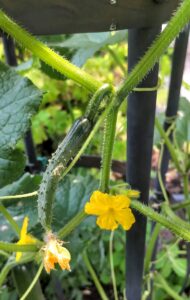
4. Most vegetables have shallow effective roots, but not all
Most vegetables take much of their water from the upper 12 to 20 inches of soil, especially when young or recently transplanted. Lettuce, spinach, onions, garlic, radishes, celery, broccoli, kale, cabbage and peppers are usually managed as shallow-rooted crops.
Beets, carrots, potatoes, peas, beans, cucumbers, zucchini, eggplant, sweet corn and tomatoes can develop a somewhat deeper effective root zone, but this depends greatly on soil conditions. A transplanted tomato in a compacted bed may function as a far shallower plant than a direct-seeded tomato in deep, open soil.
Asparagus, sweet potatoes, watermelon, pumpkin and winter squash can make use of deeper soil when conditions allow. But a hardpan, compacted layer, shallow raised bed or dry layer of soil can limit any plant’s roots.
5. Vegetables need moisture that suits the crop and its stage of growth
Newly sown seed needs the surface layer to stay moist until it germinates and begins to root. A large, occasional soaking may not meet that need. Leafy crops such as lettuce and spinach usually benefit from steady moisture while leaves are expanding.
Tomatoes, peppers, eggplants, beans, cucumbers and squash also benefit from avoiding major swings between very dry and very wet soil when they are flowering and filling fruit. Consistent moisture cannot prevent every heat-related problem, but it avoids adding water stress to a difficult period.
High temperatures can directly reduce fruit set in crops such as tomatoes and peppers by affecting flowers and pollen. Watering is still worthwhile when the soil is dry, but it cannot fully undo heat damage to flowers. This is one reason a plant may look healthy yet set fewer fruit during a hot spell.
6. “Water deeply but less often” is a principle, not a law
Deep, occasional watering tends to suit established trees, shrubs and perennials, because it can moisten a larger part of their root zone without keeping the soil constantly wet. It does not suit every plant or every soil.
Clay soils may accept water slowly, so a heavy application can run off before it soaks in. Sandy soils drain quickly and hold less water, so they may need smaller applications more often. Seedlings and shallow-rooted crops have a smaller soil reservoir than mature shrubs and cannot wait as long between watering.
The better rule is to apply water slowly enough that it enters the soil, and to wet the active root zone without leaving it waterlogged. Then observe how quickly that particular soil dries in your garden.
7. Soil-level watering is a good default, not an absolute rule
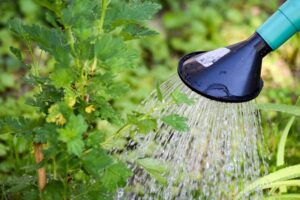
For most established vegetables, annuals, shrubs and perennials, directing routine water to the soil is efficient. It sends water to the root zone and avoids keeping foliage wet when it does not need to be.
But overhead watering has legitimate uses. Newly sown seed may need a gentle spray to keep the top layer moist. A sprinkler can be the practical way to water a lawn or a broad area of tree roots. Growers sometimes use brief overhead irrigation to cool crops during extreme heat.
The important question is whether the method is effectively wetting the root zone without runoff or unnecessarily long leaf wetness. During humid weather, avoid extra overhead watering where the soil is already moist, particularly on disease-prone flowers and vegetables.
Prolonged wet foliage can help diseases already present in the garden spread. Examples include Septoria leaf spot, early blight and bacterial spot or speck on tomatoes; downy mildew and angular leaf spot on cucumbers, melons and squash; and black rot on cabbage-family crops. A wet leaf does not create these diseases. The organism must already be present, but moisture can favour infection and its spread.
8. Morning is efficient, but it is not the only time to water
Early morning is usually a sensible time for routine watering. Temperatures are lower, wind is often calmer and plants can use the water through the day. If leaves get wet, they have time to dry.
But do not leave a drought-stressed plant until morning merely because morning is preferable. If the root zone is dry and the plant is visibly stressed in the afternoon, water it then. A timely watering is better than an ideal watering delayed too long.
Evening watering can be practical, especially for containers. Where foliage disease is a concern, direct the water to the soil. In humid weather, be particularly aware that leaves may stay wet overnight.
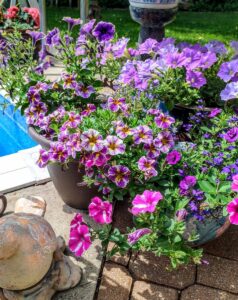
9. Containers need a separate plan
Pots, hanging baskets and planters have a limited amount of growing medium, and their sides can become hot in direct sun. A container, particularly a small one, may need checking once or twice a day during a heat wave even when the garden bed beside it has plenty of moisture.
Water slowly. If water runs immediately out of the drainage holes, the root ball may have dried enough to repel it. Apply water gradually, pause, and repeat so the growing medium can absorb it. Or place the plant container into a bigger container of water for a few minutes.
Grouping containers creates a small, more sheltered microclimate: plants shade one another, add humidity through transpiration and reduce air movement. That can slow drying, although in humid weather it can also mean foliage takes longer to dry after rain or watering.
Moving containers into afternoon shade for a few days is often sensible. A plant in a pot may need shade as much as it needs water.
10. Water cannot solve every kind of heat stress
Hot soil can impair root growth and function. Hot, dry air can increase water loss. Hot, humid air can make cooling less effective. Warm nights can also affect growth and flowering. Water cannot solve all of these stresses.
Temporary shade is useful for seedlings, recent transplants, lettuce and containers during the hottest part of the day. Use shade cloth, a sheet or an umbrella fixed above plants so air can still move around them. Remove it when the heat breaks.
Avoid major pruning, unnecessary hoeing and fertilizing plants that are visibly stressed. Fertilizer does not revive a wilted plant and applying it to dry soil can add stress. Restore suitable soil moisture first, then allow the plant time to recover.
The most dependable heat-wave advice is not a schedule. It is to look below the surface, notice the conditions around each plant and respond to the particular stress it is experiencing.