All about asparagus
Asparagus is perfect for Canada. It is quite cold-hardy and truly perennial. Once established, a well-managed bed can produce for 15 to 25 years, sometimes longer. It is slow to get started and very generous once it does. You need a little patience getting an asparagus bed to the harvesting stage, but you will be richly rewarded for many years
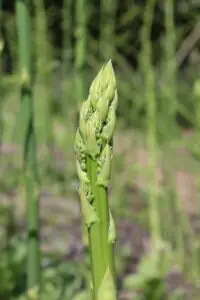
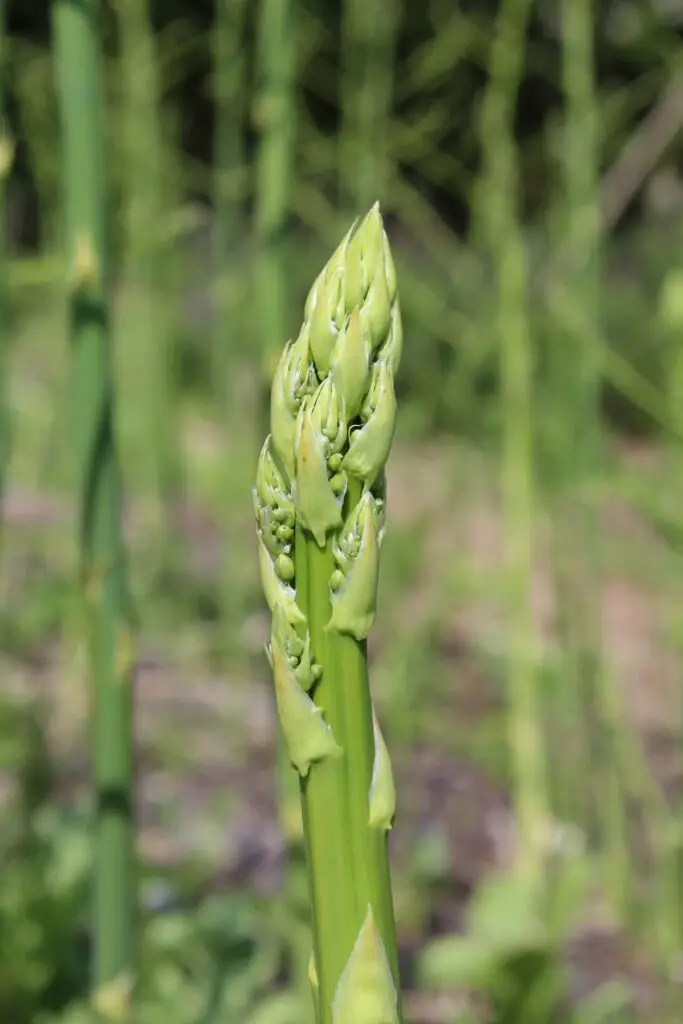
This vegetable survives winter as a crown buried below the soil surface. Every spring, thick shoots emerge directly from that crown. These shoots are the spears we harvest. If left uncut, they elongate rapidly and branch into fine, fern like stems that photosynthesize all summer, storing carbohydrates back in the crown for the following year.
Hardiness and requirements
Asparagus is fully hardy across most of Canada, tolerating winter soil temperatures well below -30 Celsius, which includes air temperatures much lower than that. It is hardy to Zone 2. Cold winters are not a problem. Poor drainage is, however. Crowns sitting in saturated soil are prone to rot, particularly during freeze thaw cycles. Raised beds are crucial in wet areas.
Choose a permanent location in full sun. Asparagus does not like disturbance, and beds are difficult to move once established. The soil should be deep, loose and well drained, with a pH of about 6.5 to 7.0. Naturally acidic soils are common in Atlantic Canada, coastal British Columbia and parts of the Canadian Shield, where lime may be beneficial if a soil test indicates a low pH. Dig in generous amounts of compost before planting and add some in spring, just as spears are starting to emerge.
Asparagus is more salt tolerant than other vegetable crops. Historically, some growers even applied salt to asparagus beds to suppress weeds. Modern research does not support this practice. Salt can damage soil structure, reduce soil biological activity and harm neighbouring plants.
Think carefully about where you plant asparagus because the roots will spread out a lot. This vegetable develops an extensive root system that can occupy a surprisingly large area around the spears; mature plantings have been found to spread for 10 feet. This means you shouldn’t dig near your asparagus bed and you shouldn’t rototill. You won’t kill the plants but you may sever the roots and your yield will drop.
Planting crowns or seed
Most gardeners plant 1-year old crowns rather than seed. Crowns establish faster and reduce the time to first harvest. Plant crowns in spring once the soil is workable. Dig a trench about 8 to 10 inches deep, form a low ridge in the bottom, and spread the roots over it like spokes. Space the plants 12 to 18 inches apart.
Seed-grown asparagus is entirely viable and often cheaper, but it adds one to two extra years before harvest. Asparagus seed germinates readily in spring once soil temperatures reach about 10 to 13 degrees Celsius. Seeds can be sown directly where the bed will be, spaced at about every 4 inches and later thinned to about every 12 to 18 inches.
Male versus female plants
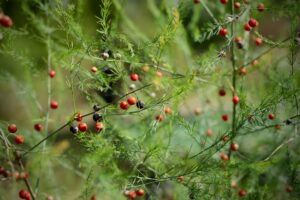
Asparagus plants are either male or female, and the difference matters mainly for yield and bed management. Female plants produce red berries, which diverts some stored energy away from spear production. Male plants do not set seed and direct more energy into spear growth, resulting in slightly thicker, more uniform harvests over time, which most people want.
Most modern cultivars are bred as all-male hybrids, developed from specialized supermale parent lines to maximize consistency and productivity. These hybrids are especially valued in commercial production, though the advantage is more modest in home gardens. Even in all-male plantings, a small percentage of female plants can still occur, and their presence does not harm the bed. Female plants can be identified by berries in late summer and removed if uniformity or self-seeding becomes a concern, but removal is a choice rather than a necessity.
Watering and feeding
Asparagus has moderate water needs but responds poorly to drought stress, particularly when the ferns are growing in the summer. Consistent moisture supports carbohydrate storage in the crown, which means better asparagus next year. Mulching helps regulate soil moisture and suppress weeds, which is important because asparagus competes poorly when young.
Nutrient demand is steady rather than high. Annual topdressing with compost in spring is usually sufficient. Excess nitrogen encourages lush fern growth at the expense of crown health and can increase susceptibility to disease, so don’t overdo it with the nitrogen.
Harvesting rules
Do not harvest in the first year after planting crowns. In the second year, harvest lightly for two to three weeks. From the third year onward, a full harvest of six to eight weeks is typical. Stop harvesting for the year when spear diameter decreases noticeably. This signals that stored reserves are being depleted.
Cut spears at ground level or snap them cleanly by hand. Leaving tall stubs increases disease risk and interferes with subsequent spear emergence.
Seasonal maintenance
Allow ferns to grow undisturbed after harvest. They should remain standing until they yellow naturally in fall. Cutting them down too early reduces energy storage. Once fully dormant, ferns can be removed to reduce overwintering sites for pests or left standing to provide overwintering sites for insects.
Asparagus beetles will bed down in dead asparagus ferns, but they are only one of several overwintering sites. Removing ferns lowers the number of pests next spring, but it will not get rid of them.
Common pests and diseases
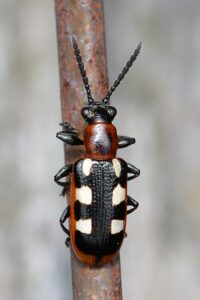
These asparagus beetles are the most common insect issue and they feed on spears and ferns. Damage is primarily cosmetic on spears but can weaken plants if you have a really bad infestation. Hand picking is often effective in small plantings. If you need something stronger, pyrethrins can be effective. Follow the directions on the container.
Fusarium crown and root rot is the most serious disease. It is soil borne and irreversible once established. The disease is most severe where plants experience repeated stress from drought, waterlogged soils, heavy harvesting, nutrient imbalance or insect damage such as chronic asparagus beetle feeding. Prevention through good drainage, careful site selection, and avoiding plant stress is far more effective than any treatment.

Fun fact
Thick or thin?
Neither thick nor thin asparagus spears are inherently better. What matters is consistency and plant health.
Thick spears come from large, well-supplied crowns with ample stored carbohydrates. There are a few things they are not, though: they are not tougher, more fibrous, or less flavourful than thin spears of the same age. Texture is determined by how quickly a spear grows and how old it is when harvested, not by diameter. A thick spear cut young is tender. A thin spear left too long is woody.
Thick spears are, however, easier to handle and offer a little room for error in the kitchen: you are less likely to overcook them.
Thin spears are often misread as a variety trait, but they are more often a signal. They can indicate young plants, drought stress, overharvesting, nutrient imbalance, or declining crown health. Toward the end of the harvest window, thinning spears are a clear cue to stop cutting and allow the bed to fern out and rebuild reserves.
From a kitchen perspective, uniformity matters more than size. Evenly sized spears cook more predictably, whether thick or thin. From a garden perspective, steadily sized spears over the full harvest period indicate that the bed is well managed.
In short, thick spears are not superior, and thin spears are not a failure. Healthy asparagus produces spears appropriate to its age, energy reserves, and the timing of harvest.Top of Form
Fun Fact
White asparagus
White asparagus is not a different variety. It is green asparagus grown without light. And it’s considered quite a delicacy in Germany and other European nations.
When spears are covered with soil, mulch or opaque row covers as they emerge, chlorophyll never develops. Without light exposure, the spears remain white and have a slightly milder, less grassy flavour. Oddly enough, white asparagus typically has a thicker skin that stays fibrous and stringy even after cooking. Gourmands tend to peel it.
Producing white asparagus requires deliberate management. Beds are hilled deeply in spring and spears are cut below the soil surface before they break through. This makes harvesting slower and more labour intensive, which is why white asparagus is more expensive and less common in home gardens.
It’s possible to grow white asparagus at home, but only practical for gardeners willing to trade ease for novelty. The plants themselves are identical.