
How vines climb
The science of climbing vines
by Shauna Dobbie
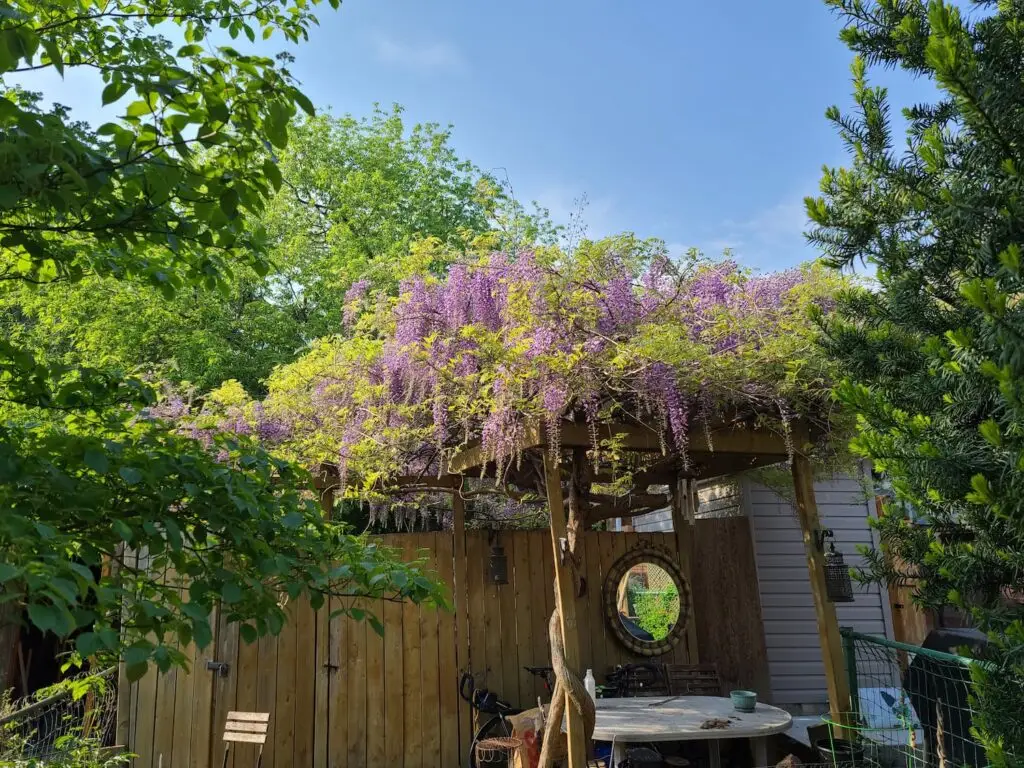
Vines are some of the most fascinating plants in the garden. From sweet peas curling delicately around a trellis to wisteria turning a pergola into a living waterfall of blooms, climbing plants offer drama, elegance and adaptability. But behind their beauty is a suite of finely tuned evolutionary adaptations. Vines have evolved different strategies to reach sunlight, compete for resources, and reproduce successfully, without needing the thick, self-supporting stems of trees or shrubs. Here’s what science tells us about how and why they climb.
Why vines climb
At its core, climbing is a growth strategy. Instead of investing in woody tissue to support their own height, vines use external structures, like trees, fences and other plants, as scaffolding. This allows them to focus energy on growing fast and reaching sunlight quickly, which is especially beneficial in densely vegetated environments like forests.
Many climbing plants respond to physical contact through a process called thigmotropism, a directional growth response to touch. When a twining stem or tendril encounters a support, specialised cells detect the contact and trigger hormonal changes that cause the plant to bend, coil, or wrap around the structure.
Five ways that vines climb
Climbing plants don’t all use the same method. Their strategies are as diverse as their species.
Twining stems. These vines spiral their main stems around a support. Classic examples include morning glories, honeysuckle and clematis.
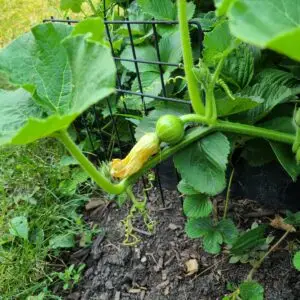
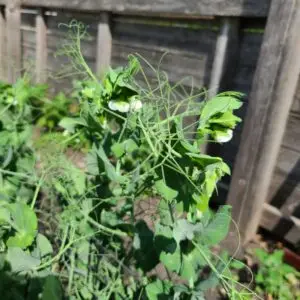
Tendrils. These are thin, wiry appendages – actually, modified leaves, leaflets, stems, or even inflorescences – that coil around supports. Peas and cucumbers use tendrils. Pea tendrils typically coil only after touching a support, whereas tendrils of squash, pumpkins and cucumbers often begin coiling on their own. These pre-formed coils act as springs, helping support the weight of the vine and absorb movement caused by wind.
Clinging rootlets. Some vines grow small aerial roots that grip rough surfaces like bark or brick. English ivy and climbing hydrangea (both Hydrangea anomala petiolaris and Schizophragma hydrangeoiedes) are good examples.
Scramblers. These plants don’t attach themselves directly but grow long, sprawling stems that weave through or rest on other plants. They often have prickles or thorns to help them grip. Examples include climbing roses and bougainvillea.
Hooks or spines. Vines using this method are all from closer to the equator. Hooks and spines work a lot like prickles on climbing roses, but they are much larger. Rattan palms in tropical forests are an example.
Left or right? The direction of twining
One of the more surprising aspects of vine behaviour is that most plants always twine in a particular direction, either clockwise (right-handed) or counterclockwise (left-handed) when viewed from above. For instance, pole beans are always clockwise, morning glories are always counterclockwise.
This pattern is not random. It’s genetically determined and highly consistent within species. Scientists have yet to fully explain the evolutionary reason for the handedness, but they suspect it may relate to the organisation of microtubules in plant cells, which guide directional cell expansion.
The role of hormones and growth regulation
Vine growth is regulated by a complex interplay of hormones.
Auxins, as mentioned, help direct growth in response to touch and gravity.
Gibberellins promote elongation of internodes (the spaces between leaves), allowing vines to rapidly explore their surroundings and reach potential supports with relatively little investment in structural tissue.
Ethylene can inhibit elongation and encourage lateral growth, useful when the vine encounters resistance or needs to spread.
These hormones act in response to environmental cues such as light (via phototropism), gravity (gravitropism), and mechanical stimulation (thigmotropism).
An ingenious strategy
Not all climbing attempts are successful. If a vine can’t find something to latch onto, it may flop and become a groundcover. In some cases, overly aggressive climbers can smother trees and become invasive. Kudzu is an example of a very aggressive non-native vine. Even natives, like wild grape and Virginia creeper, need to be watched to be kept in check. Choosing the right support and the right species is essential.
Whether they twine, cling, scramble, or coil, vines represent one of nature’s most efficient solutions to a common problem: reaching sunlight. By borrowing support from the world around them, these plants can grow higher and faster than would otherwise be possible. When you see a sweet pea wrap itself around a trellis or a climbing hydrangea scale a wall, you’re witnessing millions of years of evolutionary innovation at work.