10 Neat Things about 

Fall Weeds

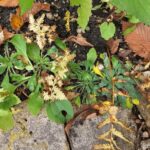
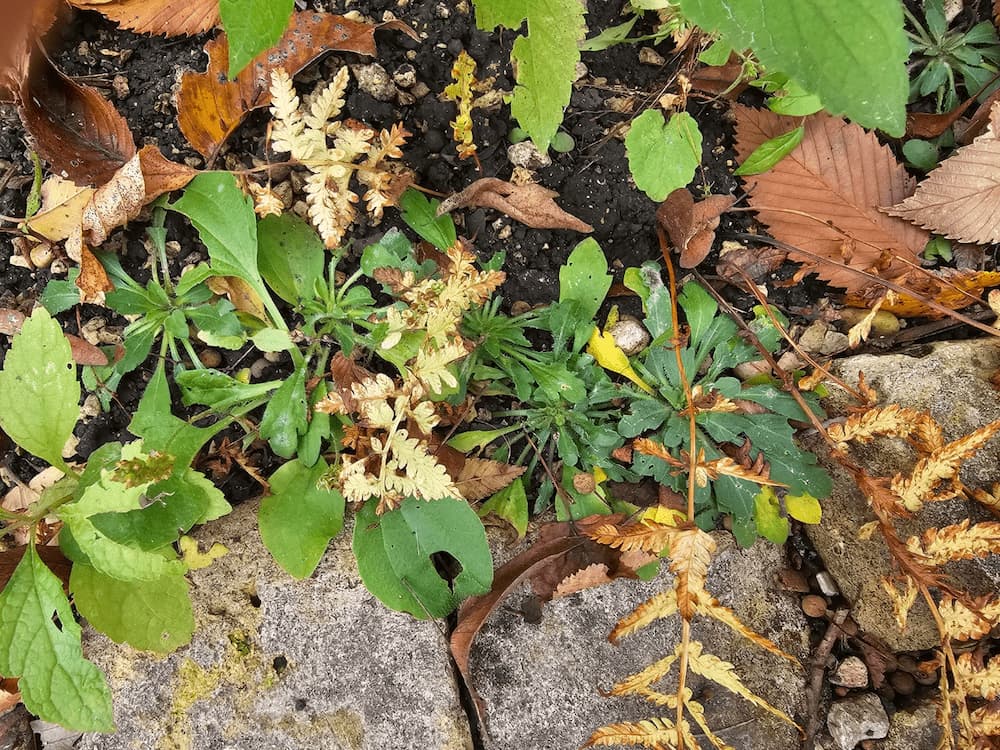
How many weeds can you see?

By mid-October most of us have closed the garden for the season, at least mentally. The tomatoes are compost, the beans are a memory and the perennials are dried. It feels like everything has gone to sleep. Everything except the weeds, which apparently never got the memo. Some are just sprouting. Some are hoarding sugar underground. Some are scattering seed for the mice. Here is what is really going on out there.

1. Some weeds are just starting when you’re ready to quit
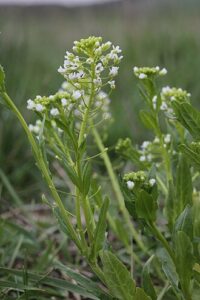
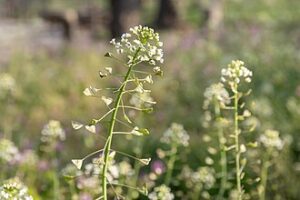
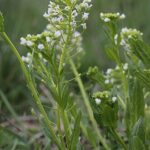
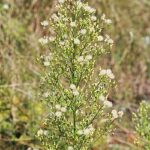
Stinkweed

When frost knocks out your tomatoes, stinkweed and shepherd’s purse are just getting going. Both are what weed scientists call facultative winter annuals, and Canadian researchers count them among our most common examples. “Facultative” means they keep their options open. They can sprout in spring like a regular annual, or they can germinate in late summer and fall, spend the winter as a flat rosette pressed against the soil, and carry on when the snow melts. That tidy little rosette at the edge of the bed in October is not a seedling that missed its chance. It is a plant with a plan.

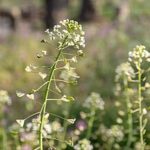
Shepherd’s purse

Researchers compared the seeds of stinkweed and shepherd’s purse plants that had come up in fall with those from plants that came up in spring. The children of spring-sprouted parents grew into plants that flowered sooner and put more of their energy into reproduction and less into roots. Seeds from fall-sprouted parents were more likely to die when artificially aged, although in shepherd’s purse the aging tended to wake seeds out of dormancy instead, especially seeds from fall parents. These seeds have a lot of strategies!

To figure out why some winter annual weeds turn up mostly in spring rather than in both seasons, Canadian scientists collected 12 species from across the country and tested how well each survived freezing and regrew afterward. The species sorted into three broad groups of cold toughness, and the lab results lined up well with what shows up in fields. The surprise was that the weeds emerging earliest in spring were not consistently the best at handling a freeze. So the first green thing you spot in April is not automatically a battle-hardened survivor of January.

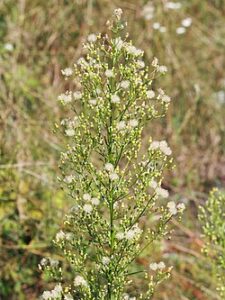
Canada fleabane

Canada fleabane, also called horseweed, is one of those weeds that can start in either season. A study at three southern Ontario sites tagged seedlings as they emerged in fall and in spring, then followed every plant to the end of its life. Spring sprouters flowered earlier, but plots where fleabane came up in fall held more plants by August. The researchers also cautioned against ignoring the spring crop, especially the earliest ones. The short version: fleabane seedlings are worth pulling whenever you meet them.

The same Ontario research group simulated winter warm spells in January, February and March to see what a fickle winter does to fleabane. Late warm spells hit hardest. A March thaw cut survival of overwintering rosettes by about half and of small seedlings by about 80 percent. The plants that did survive flowered four to eight weeks earlier than usual. That’s a small consolation for the weed, since far fewer plants made it through, but it does mean that after a mild March you’ll want to pull fleabane rosettes sooner than usual. The study also confirmed that fleabane seed has little or no dormancy, so nearly all of it sprouts within a season rather than lingering in the soil for years. That makes it a weed where stopping this year’s seed really does pay off next year.

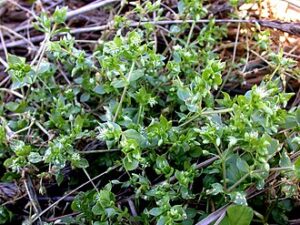
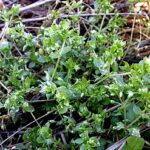
Chickweed

Common chickweed grows in every province and territory except Nunavut, and it is happy to be either an annual or a short-lived perennial depending on the conditions. When the garden opens up in fall, chickweed takes advantage and grows in the bare spots. The Canadian Food Inspection Agency reports that a single plant can produce anywhere from several hundred to roughly thirty thousand seeds. Ignoring one patch for one season is a commitment you make for years.

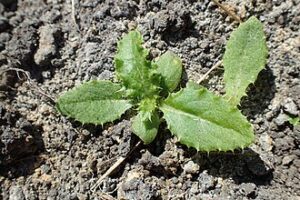
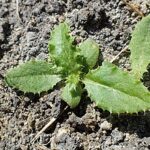
Canada thistle rosette

When thistle stems turn brown, it is tempting to think you have won. Underground, the opposite is happening. Researchers who dug up Canada thistle roots every month for two years found sugar reserves were lowest in the spring, at around 3 percent of root weight, and highest in late fall, at about 26 percent. The new buds on the roots, the ones that become next year’s shoots, grew most actively in late fall and through the winter after the tops had died. The thistle looks like it’s dying back, but really it’s getting ready for next year.

Because Canada thistle and dandelion are busy moving sugars down into their roots as they prepare for winter, anything that travels with those sugars goes down too. In Nebraska trials, a herbicide applied to Canada thistle in fall cut the stand by 92 percent eight months later, while the same product applied in spring managed only 33 percent. A related study found that spraying about 10 days after the first fall frost controlled thistle and dandelion better than spraying 10 days before it. A frost-nipped weed is not a dead weed, and that window can make a difference.

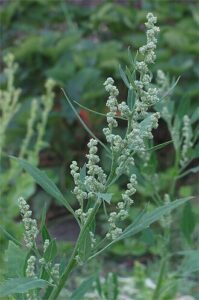
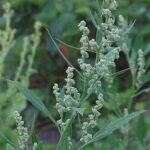
Lamb’s quarters

Fall cleanup means, for some of us, yanking the last flowering weeds and leaving them in a heap on the bed. Researchers in Delaware, Michigan and New York tested what that accomplishes. They killed late-season lamb’s quarters, common ragweed, giant foxtail, jimsonweed and velvetleaf by hoeing, mowing or spraying, at different stages from first flower onward, then left the dead plants lying on the soil in mesh bags to see what happened. It did not matter how the plants were killed. Timing was everything. Ragweed and foxtail produced viable seed even when killed the day they first flowered, and every species managed some viable seed if green, immature seeds were already on the plant. The good news is that killing weeds while their seeds were still green cut viable seed by 64 to 100 percent for most species compared with waiting until some seed had ripened. The lesson for fall is to deal with weeds as soon as they flower, and to haul flowering ones off the bed rather than leaving them to finish the job on the ground.

Weed seeds lying on the soil are food for ground beetles, crickets, mice and other small hungry things. In southern Ontario, University of Guelph researchers found ground-dwelling insects and their relatives did most of the work, eating 80 to 90 percent of the seeds that disappeared. The catch is that predators can only eat what they can find. In a study that followed weed seeds from the day they dropped in autumn until the next fall, most of the seeds that escaped being eaten had worked their way down into the soil, out of reach of most predators. Turning the soil in fall speeds that burial along. Leave the surface alone, and the seeds stay on the menu all winter. There is something deeply satisfying about outsourcing weed control to beetles.

Images
Sources

Bagavathiannan, M.V. and J.K. Norsworthy. 2013. Postdispersal loss of important arable weed seeds in the midsouthern United States. Weed Science 61(4).
Supports item 10. Tracking five weed species at two Arkansas sites from autumn seed drop to the following autumn, the researchers found most surviving seeds at predator stations had become buried and unavailable to predators, and concluded that keeping seeds on the soil surface encourages predation.

Canadian Food Inspection Agency. Weed Seed: Stellaria media (Common chickweed).
Supports item 6. A federal reference rather than a journal article, but authoritative. It reports chickweed across Canada except Nunavut, as an annual or short-lived perennial, with a single plant producing 750 to 30,400 seeds.

Cici, S.Z.H. and R.C. Van Acker. 2011. Relative freezing tolerance of facultative winter annual weeds. Canadian Journal of Plant Science 91.
Supports item 3. The authors tested freezing tolerance and regrowth in 12 species gathered across Canada and grouped them into three broad tolerance categories, with results that generally matched field observations. Early spring emergence did not consistently go with better freezing tolerance.

Cromar, H.E., S.D. Murphy and C.J. Swanton. 1999. Influence of tillage and crop residue on postdispersal predation of weed seeds. Weed Science 47.
Supports item 10. Southern Ontario field trials from 1995 to 1997 found ground-dwelling invertebrates accounted for 80 to 90 percent of lamb’s quarters and barnyard grass seeds consumed. Predation varied with tillage system, but not in a simple pattern.

Hill, E.C., K.A. Renner, M.J. VanGessel, R.R. Bellinder and B.A. Scott. 2016. Late-season weed management to stop viable weed seed production. Weed Science 64.
Supports item 9. A two-year study at sites in Delaware, Michigan and New York found that the timing of killing weeds affected viable seed production but the method did not. Common ragweed and giant foxtail made viable seed even when killed at flowering, and all five species made some when immature seed was present. Killing plants at the immature seed stage reduced viable seed by 64 to 100 percent in four of the species, compared with killing them once some seed had matured.

McAllister, R.S. and L.C. Haderlie. 1985. Seasonal variations in Canada thistle (Cirsium arvense) root bud growth and root carbohydrate reserves. Weed Science 33.
Supports item 7. Roots sampled monthly for two years in the United States showed root bud growth peaking in late fall and winter after the shoots died, and root reserves ranging from about 3 percent of fresh weight in spring to 26 percent in late fall.

Tozzi, E., E.M. Lyons and R.C. Van Acker. 2014. The effect of simulated winter warming spells on Canada fleabane seeds and plants. Canadian Journal of Plant Science 94(5).
Supports item 5. At three southern Ontario sites, March warm spells reduced survival of rosettes by 53 percent and seedlings by 80 percent on average, and exposed survivors flowered 29 to 71 days earlier. The study also confirmed that the seed has little or no dormancy, with 84 to 93 percent recruiting within a season.

Tozzi, E. and R.C. Van Acker. 2014. Effects of seedling emergence timing on the population dynamics of horseweed (Conyza canadensis var. canadensis). Weed Science 62(3).
Supports item 4. Fieldwork at three southern Ontario sites from 2009 to 2012 found that spring-emerging fleabane generally flowered earlier, while fall emergence produced higher plant densities by August.

Van Acker, R.C. and S.Z.H. Cici. 2012. Timing of stinkweed and shepherd’s-purse recruitment affects biological characteristics of progeny. Canadian Journal of Plant Science 92(5).
Supports items 1 and 2. The study looked at how fall versus spring emergence affected seed traits and performance in two common Canadian facultative winter annuals, stinkweed and shepherd’s purse. Offspring of spring-emerging parents flowered earlier and put relatively more biomass into reproduction and less into roots.

Wilson, R.G., A.R. Martin and S.D. Kachman. 2006. Seasonal changes in carbohydrates in the root of Canada thistle and the disruption of these changes by herbicides. Weed Technology.
Supports item 8. In Nebraska trials, fall-applied clopyralid cut thistle density 92 percent eight months later, compared with 33 percent eleven months after a spring application.

Wilson, R.G. and A. Michiels. 2003. Fall herbicide treatments affect carbohydrate content in roots of Canada thistle and dandelion. Weed Science.
Supports item 8. In Nebraska trials, dicamba applied 10 days after the first fall frost controlled thistle and dandelion better than the same treatment 11 days before frost.

Your subscription could not be saved. Please try again.
Your subscription has been successful.

Ten Neat Things

Subscribe to our weekly email newsletter.