Thyme is a scrubby little shrub from the rocky hills of southern Europe that somehow ended up in nearly every Canadian spice rack and herb garden. It asks for almost nothing: sun, grit and to be left alone. The surest way to kill it is kindness. Rich soil, regular watering and a cozy spot in a damp bed have done in more thyme than any winter.
Know which one you’ve got
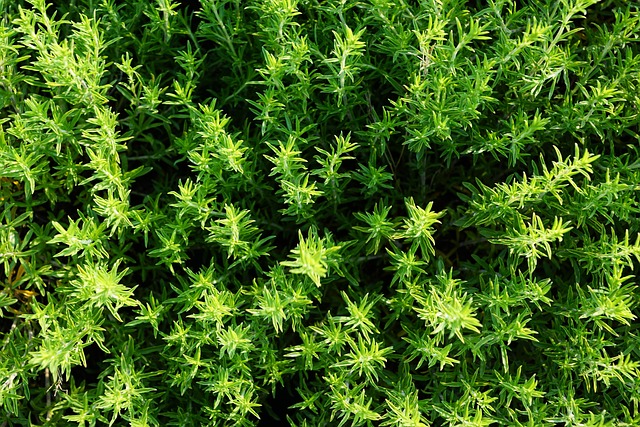
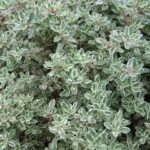
Common thyme, T. vulgaris, is the upright, bushy kitchen thyme. It makes a little woody shrub about a foot tall with grey green leaves, and it’s the one in most recipes.
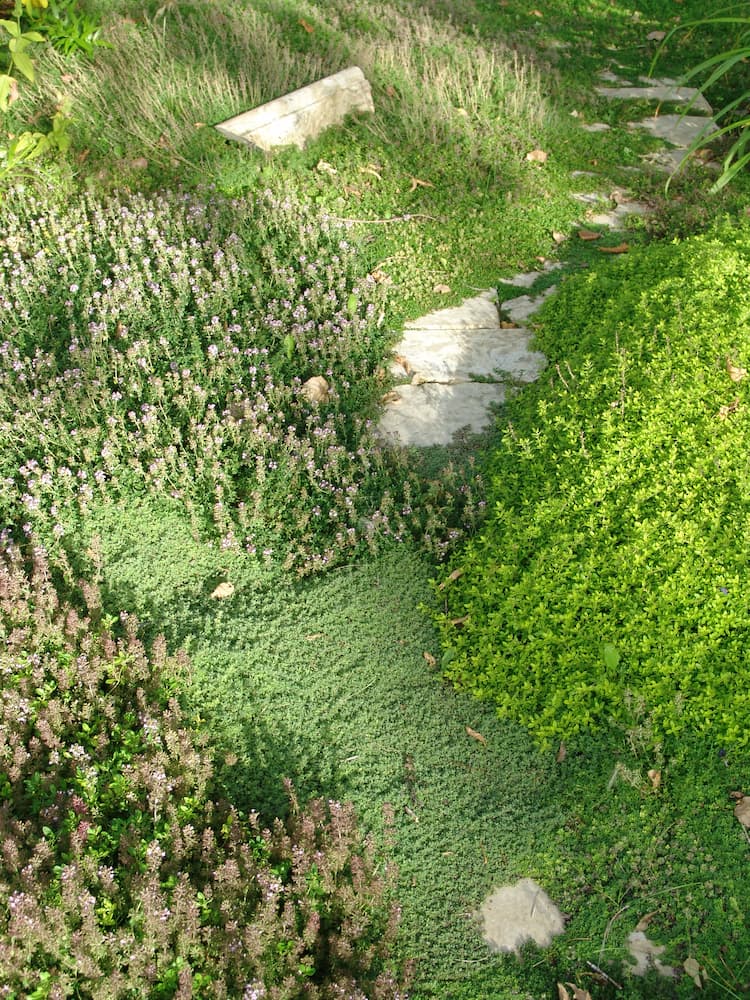
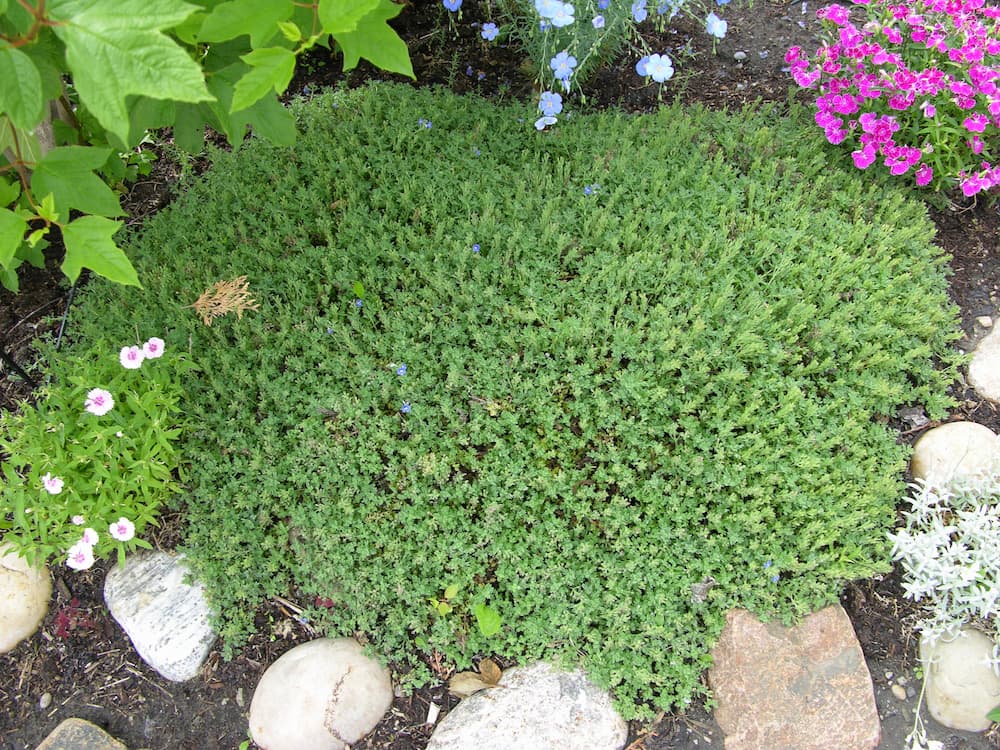
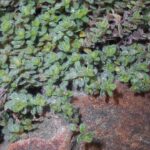
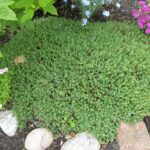
Creeping thymes are low mats that root as they spread. Wild thyme (T. serpyllum), broad-leaved thyme (T. pulegioides) and mother of thyme (T. praecox) are the usual suspects, though nurseries mix up the names freely. They’re grown more for their flowers and for filling gaps between stepping stones than for the kitchen, although they’re edible. Woolly thyme, (T. pseudolanuginosus), is the fuzzy grey one.
Lemon thyme, T. ×citriodorus, smells exactly as advertised. It’s also a bit less hardy than common thyme, so give it your best drained, most sheltered spot. (To mix you up completely, T. pulegioides is also sometimes called lemon thyme.)
Not all thyme tastes the same
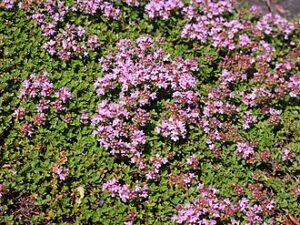
Wild common thyme in southern France comes in six chemical types, each dominated by a different oil. Only two of them, rich in thymol or carvacrol, taste like what most of us think of as thyme. The other four lean toward floral, lemony or piney notes. The type is set by the plant’s genes, not by how it’s grown.
This has practical consequences. The classic thymol and carvacrol types handle summer drought well but are more easily killed by hard winter freezes, so in the wild the milder types hold the colder sites. Researchers who surveyed the same French valleys in 1974 and again in 2010 found the frost-tender types had moved into colder ground as severe freezes became rarer. Few plants have documented their response to climate change quite so neatly.
Snails, it turns out, have opinions too. Offered a choice, garden snails went for the mild linalool type and ate the thymol and carvacrol types least.
The upshot for gardeners: two plants sold as common thyme can taste quite different. If you find one you love, keep it going from cuttings, because seedlings may not match their parent.
Thyme has another quirk. Some plants carry only female flowers, which are smaller and shed no pollen, while others are hermaphrodite. Female plants typically set more seed. Neither kind is better in the kitchen.
Planting
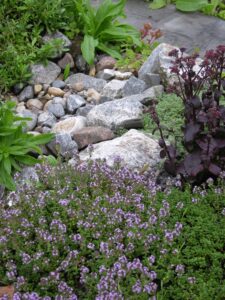
Give thyme full sun and the leanest, best drained soil you have. Raised beds, slopes, rock gardens, gravel paths and the gaps in a stone wall are all ideal. In clay, build a raised bed or mound and work in plenty of coarse grit. Thyme doesn’t need fertilizer.
Set nursery plants at the same depth they were growing in the pot, about 12 inches apart. Water them in and keep them lightly moist until new growth shows, then back off.
Thyme does well in containers too, as long as the pot drains freely and the mix is gritty. A terracotta pot that dries out quickly suits it nicely.
Starting from seed
Thyme seed is tiny, so sow it on the surface of a fine seed starting mix and press it in, or cover it with the thinnest dusting of mix. Keep it evenly moist but not wet. It germinates over a broad range of cool to room temperatures, with no heat mat required.
Start seeds indoors about eight to ten weeks before your last spring frost and transplant once the danger of frost has passed. Seedlings are slow and wispy at first, so be patient. They catch up by midsummer.
Seed is the cheapest way to get a lot of plants, but it’s also where the flavour lottery comes in. Cuttings and layering are the way to copy a plant you already like. To layer, pin a low stem to the soil with a bit of wire, cover it lightly, and cut it free once it has rooted.
Water and winter
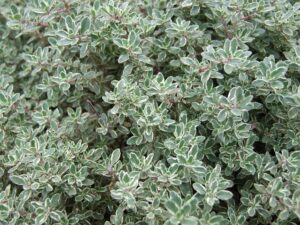
Once established, thyme needs watering only in long dry spells. It’s built for drought.
Winter is the real test, and wet is a bigger enemy than cold. Thyme sitting in soggy soil through a freeze and thaw cycle is thyme that won’t be back. Good drainage does most of the work.
Snow does the rest. In freezing tests, hardened common and creeping thyme survived minus 10 Celsius with no losses and minus 20 Celsius better than other species tested, but minus 30 Celsius killed everything. Under a blanket of snow, roots rarely see anything close to that. Leave stems standing in fall to catch snow, and where snow cover is unreliable, lay evergreen boughs over plants once the ground has frozen.
Harvest
Snip the top few inches of soft, leafy stems, never more than a third of the plant at once. Leaves can be picked any time, but flavour is strongest around early to mid bloom, when the oil content peaks. Plants grown in full sun also have more oil, and more thymol, than those in shade.
Go easy on harvesting in late summer so the plant can firm up before winter. To dry, hang small bunches somewhere warm and airy, then strip the leaves. Thyme is one of the few herbs that dries almost as well as it grows.
Pruning and renewal
Shear plants lightly after flowering to keep them compact. Cut back to just above green leaves. Thyme is reluctant to sprout from bare, woody stems, so a hard cut into old wood can leave a bald patch for good.
Even well-kept plants get woody and open in the middle after three or four years. Rather than fight it, take cuttings or layer a few stems and start fresh.
Pests and problems
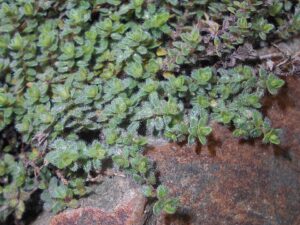
Thyme has few enemies, thanks largely to its oils. Its main problem is root rot from wet soil, and the cure is better drainage, not more care. In hot, dry, sheltered spots, spider mites sometimes cause pale speckling on the leaves; a strong spray of water knocks them back.
The same oils that protect thyme can also hold back seed germination, including the germination of thyme’s own seed. It’s one reason a thyme patch rarely fills with self-sown seedlings.
Between the stones
Creeping thymes are lovely planted in the cracks of paths and patios, where they handle light foot traffic and release a puff of scent every time they’re stepped on. They’re not a substitute for a lawn where kids play soccer, but for a lightly used path they’re hard to beat.
Creeping thymes have escaped into roadsides and fields in parts of Ontario, though they’re easy to pull and rarely crowd out much. Keep them out of natural areas nearby, and shear off the spent flowers if you’d rather they didn’t seed around.
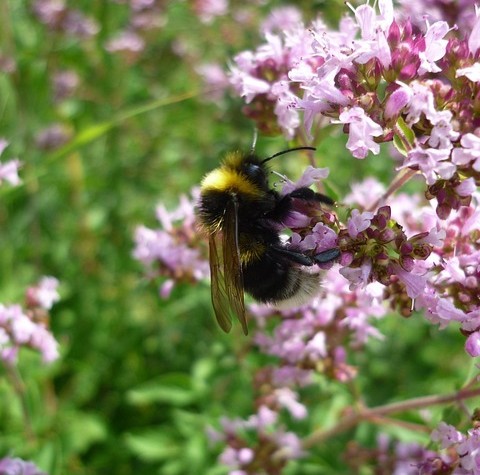
Bees love them too, so expect company when they’re in bloom, and maybe walk around rather than through.