Allium sativum (hardneck garlic is var. ophioscorodon; softneck garlic is var. sativum)
Garlic is the vegetable for gardeners who like to plant something and then ignore it for nine months. You tuck it in as everything else is dying, let winter do the hard part and dig up a small pile of treasure the following summer. It asks for very little, though what it asks for, it asks for firmly.
Need to Know
Life cycle
Perennial grown as a winter annual: planted in fall, harvested the next summer
Height and spread
Leaves 18 to 24 inches tall; hardneck flower stalks (scapes) can reach about 36 inches; each plant spreads 6 to 8 inches
Planting depth
About 2 inches deep
Sun
Full sun
Planting time
A few weeks before the ground freezes, roughly mid September in the coldest regions to late October in milder ones
Soil
Loose, well drained and rich in organic matter; pH about 6 to 7
Zone
Hardneck types to Zone 3 with winter mulch; softneck types most reliable in Zone 5 and warmer
Harvest time
Late July to mid August, depending on variety and region
Frost tolerance
Cloves overwinter in frozen soil without complaint; the real winter risks are freeze-thaw heaving and shoots that emerged too early in fall
Good to Know
Plant family
Amaryllidaceae (onion family)
Native status
Not native; wild ancestors come from Central Asia and northeastern Iran
Start method
Individual cloves planted in fall; bulbils from hardneck scapes also work but take two or more years to make full bulbs
Spacing
4 to 6 inches between cloves; rows at least 8 inches apart
Planting time
A few weeks before the ground freezes, roughly mid September in the coldest regions to late October in milder ones
Cold requirement
Several weeks below about 10 Celsius; a Canadian winter more than covers it
Low; hardneck flower heads mostly make bulbils instead of flowers, and most gardeners snap them off anyway
Deer and rabbit resistance
Good; browsers generally leave it alone
Maintenance
Mulch for winter, weed diligently, remove scapes, cure after harvest
Pests and diseases
Leek moth, stem and bulb nematode, white rot, fusarium basal rot, penicillium mould in storage
Storage
Varies by type: Rocambole hardnecks keep the shortest time, Porcelain hardnecks most of the year and softnecks longest; store cool, dark and dry, not in the fridge
What trouble looks like
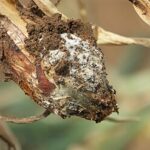
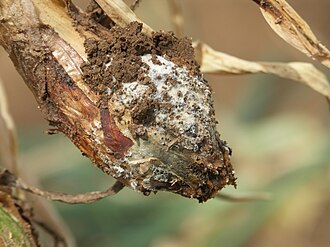
White rot (shown on onion)
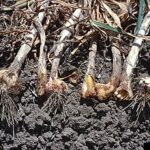
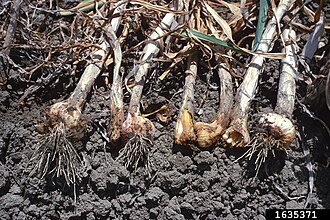
Nematode damage
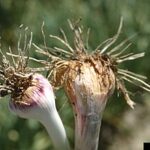
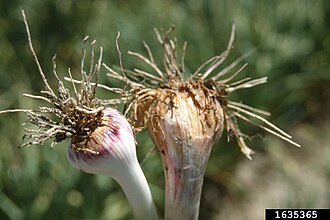
Fusarium wilt
Hardneck or softneck
Hardneck garlic sends up a stiff flower stalk, the scape, in early summer. It’s the hardier of the two, makes fewer but bigger cloves and peels easily. Storage life depends on the type: Rocamboles are the first to go soft, while Porcelains can last most of the year. Softneck garlic doesn’t make a scape, which leaves it with a soft, pliable neck that braids nicely. It packs in more cloves per bulb and generally keeps the longest, but it’s less tolerant of hard winters.
In most of Canada, hardneck is the safer bet. If you want garlic that lasts into spring, choose a Porcelain. Softneck is worth a try in milder regions.
Start with clean seed garlic
Cultivated garlic doesn’t make true seed. Every clove is a clone of its parent, so whatever you plant, you get more of it. That includes its passengers. Stem and bulb nematode, white rot and fusarium all travel in cloves, and once they’re in your soil they can stay for years, or decades in the case of white rot.
That’s why the garlic you plant matters more than almost anything else you do. Buy seed garlic from a grower who has had the stock tested for nematodes and can tell you where it was grown. Labels can be misleading: “certified organic” describes how the garlic was grown, not whether it’s free of pests. The cleanest option is stock from a clean seed program, which is tested for viruses and nematodes. It costs more and starts small, but it builds into a healthy, productive line in two or three years.
Grocery store garlic is a gamble, since no one has checked what it carries. Nematodes can hide in perfectly healthy-looking bulbs: when Ontario researchers tested garlic from farms across the province in 2010, nearly three quarters of the samples were infested.
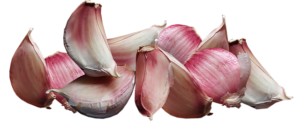
Keep bulbs whole until just before planting, since loose cloves deteriorate faster. When you break them apart, keep the papery skins on, plant the biggest, healthiest cloves and send the runts to the kitchen. Big cloves grow big bulbs.
Planting
Choose a sunny spot with well-drained soil. If you start with clean seed garlic and have never had problems, you can grow garlic in the same bed for a few years. It’s still wise to move it around when you can, since fusarium lives in most soils and builds up under a steady diet of garlic, onions and leeks. If disease ever turns up, keep all alliums out of that bed for at least three years. Work some compost into the soil before planting, because garlic sitting in a wet winter bed tends to rot.
Timing is the tricky part. Plant too early and the cloves put up leaves before winter. A little fall growth does no harm, but lush plants are more easily injured by cold, and warm wet soil also invites clove rot. Plant too late and the cloves won’t grow enough roots to anchor themselves. The goal is roots in fall and leaves in spring. Aim to plant a few weeks before the ground freezes for good.
Set each clove about 2 inches deep, pointed end up. Upside down cloves will still grow, but they make curved shoots and lopsided bulbs, like a plant that took a wrong turn.
Winter
Once the soil is cold, cover the bed with 4 to 6 inches of clean straw, shredded leaves or other mulch. Mulch keeps the soil from freezing and thawing repeatedly, which can heave cloves right out of the ground. Garlic shoots push through mulch easily in spring. A site that collects good snow cover and is sheltered from wind is even better.
Spring and early summer
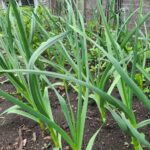
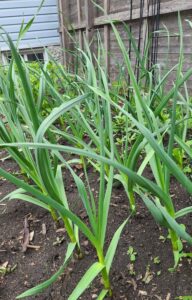
Garlic is a poor competitor, with skinny upright leaves that shade nothing, so weeds will happily walk all over it. Hoe shallowly to avoid cutting its roots or hand pull weeds.
When growth starts in spring, give the plants a nitrogen boost, such as a fertilizer high in nitrogen or a side dressing of well-rotted manure, and repeat once or twice over the next several weeks. Stop by early summer; late feeding grows leaves, not bulbs. Phosphorus and potassium are best guided by a soil test and worked in before planting. Keep the soil evenly moist. Dry spells while the bulbs are swelling shrink the harvest.
Scapes
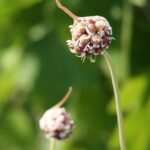
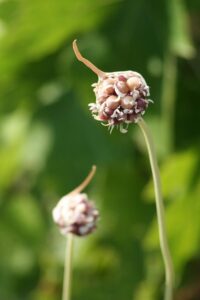
When garlic forms bulbils it uses energy stored in bulbs
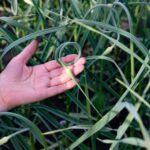
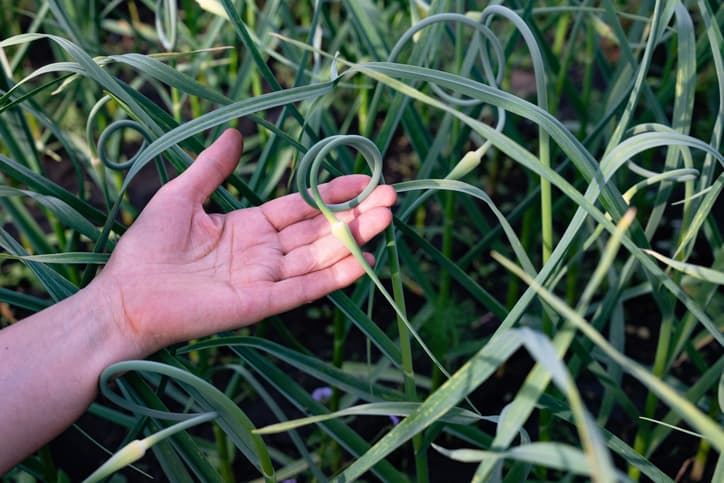
In early summer, hardneck garlic sends up its scape, which curls into a loop like a swan with ideas. Snap or cut it off once it has curled and before it straightens out. With the scape gone, the plant puts its energy into the bulb instead of the bulbils at the tip, and the bulbs usually come out noticeably bigger.
This is also a free second harvest (before the first, but you get the point). Scapes are tender, mildly garlicky and excellent grilled, stir-fried or blended into pesto. If you’d like bulbils for planting, leave a few scapes on and let them ripen.
Harvest and curing
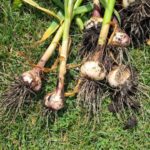
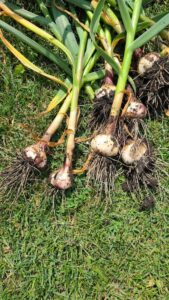
Stop watering when the plants start to mature. Bulbs keep sizing up until the leaves brown from the tips down. Dig when roughly a third to half of the leaves have died back. Pull too early and the bulbs shrivel when they dry; wait too long and the wrappers split and the cloves start to separate.
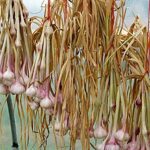
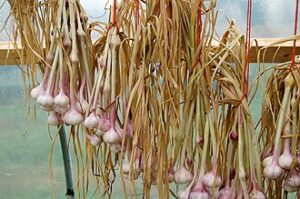
Loosen the soil with a garden fork rather than yanking on the stems. Don’t wash the bulbs or rub them clean, as the outer skins are fragile. Tie the plants in bundles of 10 to 15 and hang them, leaves and all, somewhere warm, dry, shaded and airy for a few weeks. A garage, shed or covered porch is ideal; a cool, damp basement is not. A fan helps in humid weather. Once the necks are dry and tight, trim the roots and tops.
Storage
For most kitchens, the best spot is cool, dark, dry and airy: a pantry shelf, a basket or a mesh bag, not a sealed container. Skip the fridge. Its temperature is just right to wake garlic up and set it sprouting, and its damp air invites mould. Commercial growers keep garlic for months at just below freezing in dry, controlled storage, but that’s beyond what a home fridge can manage.
Garlic you plan to plant should stay warmer, at 10 Celsius to room temperature, so it doesn’t sprout early and grow oddly once it’s in the ground.
Trouble
Most garlic problems arrive with the planting stock or live in the soil, so clean stock and crop rotation solve a lot.
Leek moth is an invasive insect whose larvae tunnel into leaves and scapes. It has spread through eastern Ontario, Quebec and the Maritimes and is expected to keep moving into other allium-growing areas. Floating row cover laid over the plants keeps the moths from laying eggs.
Stem and bulb nematode is a microscopic worm that stunts and twists plants and rots the base of the bulb. It arrives in infected cloves, and infested soil stays infested, so start with clean seed garlic. If it appears, give the bed at least three years without alliums.
White rot yellows and topples the leaves and leaves fluffy white fungus with tiny black specks on the bulb. It can persist in soil for decades. Remove infected plants and put them in the garbage. A well-managed hot compost pile can kill white rot, but most backyard piles have cool spots where it survives, and the finished compost would spread it through the garden. Grow garlic elsewhere.
Fusarium basal rot and penicillium mould cause rotting at the base of the bulb and in storage. Plant only firm, unblemished cloves and don’t plant into warm soil.
Pest plagues Ontario’s garlic crop Reports the results of a provincial survey by the University of Guelph, OMAFRA and the Garlic Growers Association of Ontario, which found stem and bulb nematode in 73 percent of 123 garlic samples from 79 farms. A trade press account of the survey rather than a peer-reviewed paper. Better Farming, 2011.
Further reading
The Great Canadian Garlic Collection from Seeds of Diversity Canada describes dozens of varieties grown in Canadian gardens and runs a program where gardeners help grow them out.



 Choose a sunny spot with well-drained soil. If you start with clean seed garlic and have never had problems, you can grow garlic in the same bed for a few years. It’s still wise to move it around when you can, since fusarium lives in most soils and builds up under a steady diet of garlic, onions and leeks. If disease ever turns up, keep all alliums out of that bed for at least three years. Work some compost into the soil before planting, because garlic sitting in a wet winter bed tends to rot.
 Garlic is a poor competitor, with skinny upright leaves that shade nothing, so weeds will happily walk all over it. Hoe shallowly to avoid cutting its roots or hand pull weeds.
 Stop watering when the plants start to mature. Bulbs keep sizing up until the leaves brown from the tips down. Dig when roughly a third to half of the leaves have died back. Pull too early and the bulbs shrivel when they dry; wait too long and the wrappers split and the cloves start to separate.