
Where to plant it
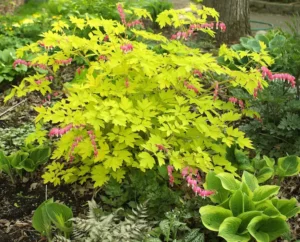
Think of the forest floor in spring, before the trees have fully leafed out: bright, cool, moist and sheltered. That’s what bleeding heart wants. Dappled shade under deciduous trees or the east side of a building suits it well. Deep shade gives you lovely leaves and very few hearts. Hot afternoon sun scorches it and hurries it into dormancy.
Drainage matters more than almost anything else. Bleeding heart likes moisture, but soggy soil, especially in winter, rots the fleshy roots and kills the plant. A sheltered spot also helps, since the flowering stems are hollow and snap in strong wind.
Planting
Plant in spring or early autumn. Potted plants go in at the same depth they grew in the pot. Bare-root crowns, often sold in bags in spring, should have their buds 1 to 2 inches below the soil surface.
Give it room. That modest little crown becomes a shrub-sized clump within a few years. And mark the spot. A plant that vanishes every summer is a plant that can get dug up by accident in the fall.
Water and feeding
The famous summer disappearing act isn’t really triggered by heat, although heat gets the blame. It’s a response to dry soil, and hot weather simply dries soil faster. Keep the ground evenly moist and the plant stays green well into summer, sometimes until the shorter days of autumn send it to sleep. A 2-inch layer of mulch helps hold that moisture and keeps the roots cool.
Feeding is simple. A top dressing of compost or well-rotted manure each autumn or early spring is plenty.
When it fades
When the leaves start to yellow, resist the urge to tidy up. Cutting it back in midsummer won’t bring a fresh flush of leaves, and the fading foliage is busy sending food down to the roots. Plants left to die back on their own come back bigger, with more flowering stems. Once the leaves are completely brown, cut them to the ground.
To hide the gap, plant it among late risers that fill out as it fades: hostas, ferns, astilbe or lungwort. A few shade annuals tucked in nearby also do the job.
Winter
Bleeding heart asks for nothing in winter except good drainage. Where snow cover is thin or unreliable, a loose mulch of leaves after the ground freezes helps keep the crown from heaving.
Making more
You rarely need to divide bleeding heart. It doesn’t get crowded in the centre, and its brittle roots resent being disturbed. If you want more plants, divide in autumn once it’s dormant, or very early in spring before the buds break. Each piece needs two or three buds (or eyes). You can also take root cuttings 3 to 4 inches long in spring or autumn and set them in a moist potting mix.
Seed takes patience. A plant won’t set seed with its own pollen, and since most nursery plants are divisions, two plants of the same variety are usually genetically the same plant. You need two genetically different plants nearby, such as two different varieties, or a variety and a seedling. The seed needs a warm spell followed by a cold one before it will sprout, so sow it fresh outdoors and expect seedlings the following spring. They bloom in their second year. Self-sown seedlings sometimes turn up around established plants and may not look like their parents.
A few to look for
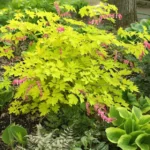
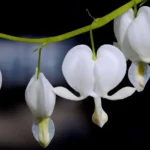
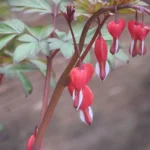
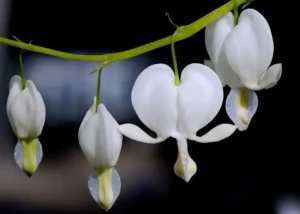
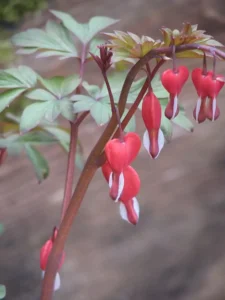
The classic is rose-pink and white. ‘Alba’ has pure white flowers. ‘Gold Heart’ has golden leaves on peach-coloured stems; give it moderate shade, since the leaves sunburn in full sun. ‘Valentine’ has cherry-red hearts on dark red stems. It was found as a chance seedling in a garden in Prince George, British Columbia.
Problems
Bleeding heart has few enemies. Slugs and snails may chew new shoots, and aphids sometimes cluster on the stems. Deer and rabbits ignore it.
Root and crown rot are the most common killers, and both come from wet soil. Fusarium wilt causes yellowing and wilting despite good moisture.
Bleeding heart can also pick up tobacco rattle virus, which shows up as yellow rings or wavy lines on the leaves. It travels in divided nursery stock and through soil nematodes, and there is no cure. Infected plants don’t always decline, but they can pass the virus to hostas, peonies and other perennials, so it’s best to remove any plant with symptoms and buy from reputable growers.
In a vase
Bleeding heart makes a lovely cut flower. Cut stems when the first heart is fully open; the rest will open in the vase. They last about a week in plain water and longer with floral preservative.