Syringa spp., mainly S. vulgaris, S. ×hyacinthiflora, S. ×prestoniae, S. meyeri and S. pubescens subsp. patula
Also called: common lilac; French lilac; early lilac; Preston lilac; dwarf Korean lilac
Japanese tree lilac, S. reticulata, is a different animal altogether and will have its own article.
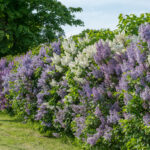
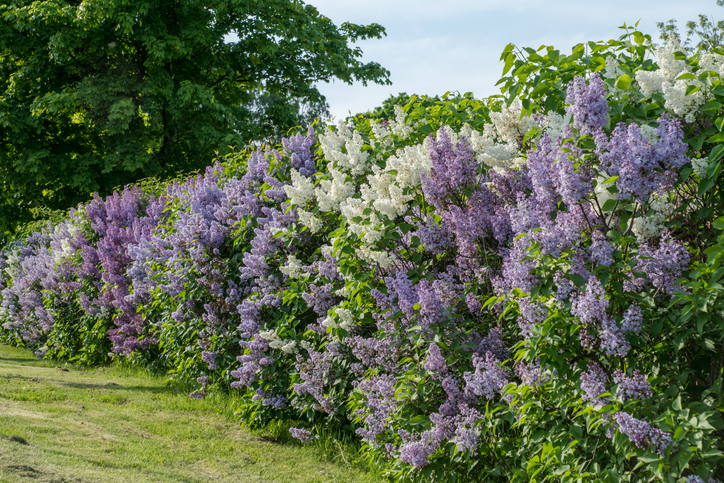
Lilacs are the grandparents of the Canadian yard. They’re tough, they sprawl a bit, and they have a habit of outliving whoever planted them. They also smell divine. Plenty of old farmsteads have lost the house, the barn and the family but kept the lilac hedge. For two weeks each spring, lilacs bloom with abandon. The rest of the summer it’s a sturdy green screen—although re-bloomers may come back— and all winter it’s a bundle of bare sticks. Still a fair trade.
Know which one you’ve got
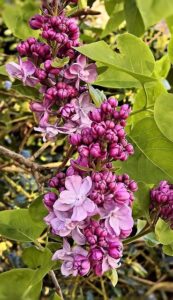
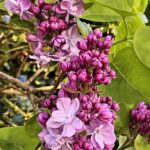
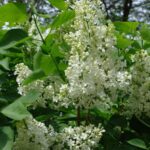
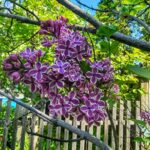
Syringa vulgaris is the one in most old yards. It hails from the rocky hills of the Balkans, grows into a big suckering thicket and carries the classic fragrance. Hundreds of cultivars exist, single and double, from white through blue and pink to deep purple. Some colour outside the lines. ‘Sensation’ has purple petals edged in white, as if each flower had been carefully outlined. ‘Primrose’ is the yellow one, though its butter yellow often turns out to be more of a cream; plant it beside a white lilac and the yellow shows up better. Both came from the same Dutch nurseryman, who found them as chance mutations on other lilacs.
S. ×hyacinthiflora crosses S. vulgaris with a Chinese species and blooms a little earlier. Frank Skinner of Dropmore, Manitoba, bred many of the hardiest, with his first introductions in 1932. ‘Pocahontas’ and ‘Maiden’s Blush’, his last introduction, are still sold.
S. ×prestoniae is Canadian bred. Isabella Preston, Canada’s first female professional plant breeder, made the original crosses at the Central Experimental Farm in Ottawa in 1920, using two very hardy Chinese species. The results are big, fast shrubs with nodding clusters in pinks and lavenders and a spicier scent. They bloom about 10 days after S. vulgaris, which stretches the lilac season nicely. Many are named for Shakespeare characters, so a Preston hedge reads a bit like a cast list.
S. meyeri ‘Palibin’ is the classic choice for small yards. It stays around 4 to 5 feet and suckers very little. S. pubescens subsp. patula ‘Miss Kim’ is often sold as a dwarf too, but give it time and it reaches 6 to 8 feet. It just takes its sweet time getting there. For a truly small lilac, ‘Baby Kim’ stays at 2 to 3 feet and keeps its purple colour instead of fading to white.
Reblooming lilacs, such as the Bloomerang series, ‘Josee’ and ‘Scent and Sensibility’, flower in spring, take a rest, then bloom again from midsummer into fall on the season’s new growth. The encore is lighter than the main show and depends on a cool summer, so think of it as a bonus. These are compact plants, mostly 3 to 6 feet.
Planting
Give lilacs sun. In shade they grow tall and gangly, reaching for light, and bloom sparsely. They want well-drained soil and dislike wet feet, but they’re happy in the alkaline soils found across much of Canada.
Buy own-root plants when you can. Suckers from an own-root lilac are the same plant, so you can dig them up and share them. Suckers from a grafted lilac come from the rootstock, which may be a different lilac altogether, and they can quietly take over.
Nurseries graft lilacs because they’re surprisingly hard to root from cuttings, but tissue culture has made own-root plants much easier to find. If you do buy a grafted lilac, plant it with the graft a few inches below the soil so the top can grow roots of its own.
Prune after the party
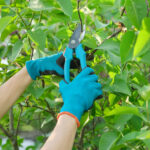
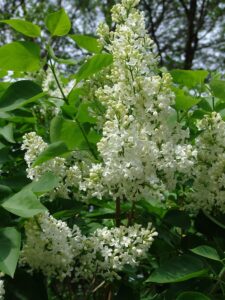
Lilacs set next year’s flower buds in summer, a few weeks after bloom ends. The buds sit through winter already formed and finish developing in spring. Prune right after flowering. A tidy-up in fall or early spring removes exactly the flowers you’ve been waiting for.
Deadheading is just the lightest kind of pruning, and it follows the same rule. If you want a tidier shrub, snip off the spent clusters right after bloom, cutting just below the flowers so you leave the new shoots underneath alone. Skip it and the lilac won’t mind. Larry Hodgson, Canada’s Laidback Gardener, called deadheading lilacs a garden myth and said it changes nothing. He argued most S. vulgaris cultivars tend to bloom heavily one year and lightly the next regardless.
On rebloomers, trimming after the spring flush delays the second round by a few weeks.
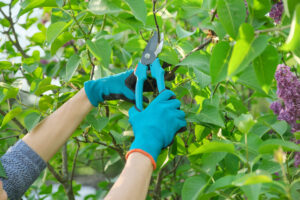
Old lilacs get tall, with every flower at the top. After bloom, cut a third of the oldest, thickest stems to the ground, and keep a few strong suckers as replacements. In three years you have a new shrub on old roots.
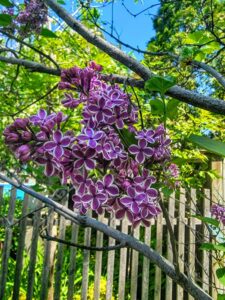
Need to Know
Life cycle | Long-lived deciduous shrub |
Height and spread | Mostly 6 to 15 feet; compact types 3 to 6 feet |
Sun | Full sun for good bloom |
Water | Drought tolerant once established; water deeply in late summer dry spells |
Soil | Well drained; tolerates alkaline soil; pH about 6.5 to 7.5 |
Zone | Zone 2 or 3, depending on type |
Bloom time | Late spring; Preston lilacs about 10 days later; rebloomers again midsummer to fall |
Frost tolerance | Dormant plants take about -40 Celsius; hard spring frost can brown opening flowers |
Good to Know
Plant family | Oleaceae (olive family) |
Native status | Not native; from southeastern Europe and East Asia. Preston lilacs were bred in Canada |
Bloom colour | Lilac, purple, blue, pink, magenta, white |
Start method | Nursery plants or suckers from own-root plants |
Spacing | 6 to 10 feet; 2 to 5 feet for compact types |
Cultivars | ‘Pocahontas’, ‘Maiden’s Blush’, ‘Donald Wyman’, ‘Palibin’, ‘Miss Kim’, ‘Josee’, Bloomerang® series |
Pollinator value | Moderate; deep flowers favour butterflies and moths |
Deer and rabbit resistance | Deer usually pass them by; rabbits may gnaw young stems in winter |
Maintenance | Prune right after bloom; renew old shrubs a third at a time |
Why won’t my lilac bloom?
The usual suspects:
- Pruning at the wrong time. See above.
- Shade. Trees grow; the sunny spot of twenty years ago may not be sunny anymore.
- Youth. Young lilacs can take several years to settle in and bloom well. ‘Maiden’s Blush’ is known for flowering young.
- Late-summer drought. Because buds form in summer and fall, a dry August can mean a thin show next spring. In one study, lilacs produced the fewest flowers after a dry late summer and fall. Established lilacs don’t look thirsty, but a deep soak during dry spells pays off.

Pests and diseases
Powdery mildew coats leaves in a grey-white film in late summer, especially on S. vulgaris. It looks worse than it is. Genetic work suggests the lilac mildew common in North America originated here and later spread to Europe and Asia, so it’s one Canadian-grown export we don’t brag about.
Bacterial blight blackens young shoots and leaves in spring, often after frost. The bacterium, Pseudomonas syringae, was named for lilac, the plant it was first isolated from. It also helps frost do its damage. Leaves can usually stay unfrozen a few degrees below zero, but P. syringae acts as a seed for ice crystals, so leaves freeze at milder temperatures than they otherwise would. That’s one reason blight so often follows a spring frost. Cut out blackened shoots in dry weather, clean your pruners and keep shrubs thinned for air flow.
Lilac leafminer larvae tunnel into leaves and then roll them up, leaving brown, crumpled foliage by midsummer. This European moth reached North America around 1923. A Calgary study found parasitic wasps attacking it, which is one reason not to spray at the first sign of trouble. On small plants, pick off rolled leaves.
Lilac borer larvae tunnel into older stems, leaving holes and sawdust. Cut out affected stems. Regular renewal pruning keeps the old wood the borers prefer to a minimum.
A shrub with a day job
Lilacs moonlight as scientific instruments. Their bloom date tracks spring warmth so reliably that researchers have used them as living thermometers since the 1950s. A network of genetically identical lilacs was planted in 1959 across the northeastern United States and eastern Canada, and records from it show lilacs in that region blooming about four days earlier by 2001 than in 1965. Canada’s PlantWatch program invites gardeners to record bloom dates, so the lilac in your yard can have a research career too.
Images


By: Dorothy Dobbie
Used with permission


By: Dorothy Dobbie
Used with permission
References
Beaubien, E., & Hamann, A. (2011). Spring flowering response to climate change between 1936 and 2006 in Alberta, Canada. BioScience, 61(7), 514-524.
Hirano, S. S., & Upper, C. D. (2000). Bacteria in the leaf ecosystem with emphasis on Pseudomonas syringae: A pathogen, ice nucleus, and epiphyte. Microbiology and Molecular Biology Reviews, 64(3), 624-653.
Jędrzejuk, A., & Szlachetka, W. (2005). Development of flower organs in common lilac (Syringa vulgaris L.) cv. Mme Florent Stepman. Acta Biologica Cracoviensia Series Botanica, 47(2), 41-52.
Lindow, S. E., Arny, D. C., & Upper, C. D. (1982). Bacterial ice nucleation: A factor in frost injury to plants. Plant Physiology, 70(4), 1084-1089.
Murdoch, R. F. M. (1967). The biology of the lilac leaf miner, Gracillaria syringella Fabr. (Lepidoptera: Gracillariidae). Quaestiones Entomologicae, 3, 247-281.
Seko, Y., Kiss, L., Heluta, V., Grigaliunaite, B., & Takamatsu, S. (2011). Morphological and molecular characterization of two ITS groups of Erysiphe (Erysiphales) occurring on Syringa and Ligustrum (Oleaceae). Mycoscience, 52(3), 174-182.
Wolfe, D. W., Schwartz, M. D., Lakso, A. N., Otsuki, Y., Pool, R. M., & Shaulis, N. J. (2005). Climate change and shifts in spring phenology of three horticultural woody perennials in northeastern USA. International Journal of Biometeorology, 49(5), 303-309.
Further reading
Lilacs at the Central Experimental Farm, Friends of the Farm. The story of Isabella Preston’s lilacs in Ottawa.
Isabella Preston, The Canadian Encyclopedia. A short biography of Canada’s pioneering plant breeder.
Syringa × hyacinthiflora, Oregon State University. Frank Skinner’s early lilacs and other cultivars.
Bloomerang Purple Reblooming Lilac, Proven Winners. How the rebloom works and when to prune.
Lilac leafminer, Natural Resources Canada. What the damage looks like and how the pest lives.
Lilac powdery mildew, Pacific Northwest Plant Disease Management Handbook. Symptoms and which lilacs resist it.